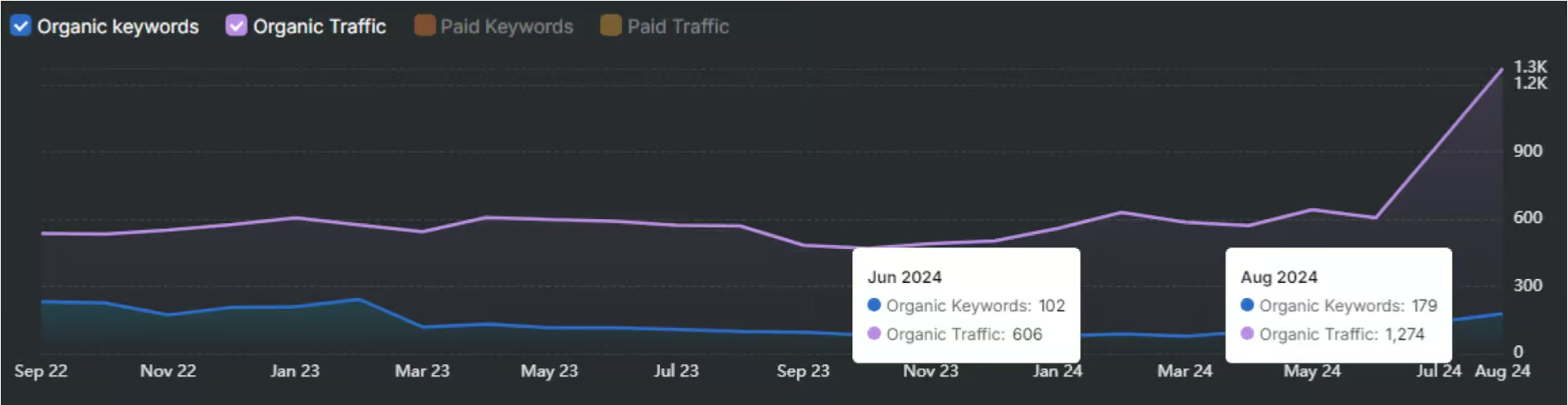
Have you ever wondered, “How healthy is my website?”. ⛑️
It’s easy to overlook a website health check, especially if you’re using managed hosting services where updates and security are taken care of for you.
However, your website is the cornerstone of your business’s online presence, and a “healthy” website is crucial for success.
As a business owner, you’re probably juggling many tasks, and website maintenance might not always make the top of your list. But if people can’t quickly find you or get frustrated navigating your site, they’ll leave… And you’ll lose valuable opportunities.
A healthy website performs well, loads fast, ranks well in search results, and looks great on mobile, thanks to solid technical SEO practices.
To ensure your site stays in top shape, keep reading to learn the 8 best practices to improve it! 🧑⚕️
What is Website Health?
Website health refers to how well your site performs, from its foundation to any errors or issues it may have.
Think of it like your own health: Regular checkups help catch problems early. A well-maintained website runs smoothly, loads quickly, and stays error-free, ensuring a great experience for visitors.

What are the Benefits of Website Health?
on search engines, stays secure, and delivers a smooth user experience. Regular website health checks help you catch issues early, keeping your site running efficiently and your visitors happy.
Below is why maintaining website health matters for the users, for Google, and for your business.
For the users:
- Better User Experience and Engagement: A fast, easy-to-navigate, and visually appealing site keeps visitors engaged.
- Mobile-Friendly Design: Ensures a seamless experience on any device.
- Stronger Security: Regular updates help protect against hacks and data breaches.
- Improved SEO Accessibility: Makes your site usable for all, including people with disabilities.
For Google:
- Higher Rankings and Visibility: Search engines favor well-optimized, regularly maintained sites.
- Stronger SEO and Organic Traffic: Better structure, speed, and content lead to more visitors.
For Your Business:
- More Trust and Credibility: A reliable, professional site builds customer confidence.
- Higher Conversions and Engagement: A smooth experience encourages visitors to take action.
- Cost Savings and Security: Prevents costly fixes and protects customer data.
- Competitive Edge: A well-maintained site helps you stand out.
8 Easy Steps to do a Website Health Check
There are many strategies to improve website health, but we’re focusing on the most important ones for SEO and user experience, ensuring your site is enjoyable for visitors while ranking high on Google.
1. Page Speed to Improve User Experience
If your site loads slowly, visitors will leave, and search engines will rank you lower. A slow website means fewer conversions, lower engagement, and lost revenue.
To check your site speed, use tools like Google PageSpeed Insights (PSI) or GTmetrix, just enter your URL, and they’ll analyze your load time and provide actionable recommendations.
- Slow speed is often caused by large, unoptimized images, poor web hosting, and bulky pages filled with unnecessary scripts and plugins.
- To improve page speed, upgrade your web hosting, use a caching plugin (if on WordPress), compress large images, and set up a Content Delivery Network (CDN) to serve your site from the closest location to visitors.
- Instead of manually tracking issues, a site audit tool can automatically analyze your website health, detect problems, and provide step-by-step solutions. These tools also track historical data, so you can measure improvements over time.
A site audit tool can make it easy. These tools automatically analyze your website health, detect performance problems, and provide step-by-step recommendations to fix them.
Plus, you can track historical data to see how your site improves over time.
2. Core Web Vitals to Enhance Performance
Core Web Vitals are key performance metrics that Google uses to measure your website’s loading speed, responsiveness, and visual stability.
A fast, stable, and responsive website keeps visitors engaged and improves your chances of ranking higher on Google. Slow load times or frustrating page shifts can drive users away.
They consist of three key metrics:
- Largest Contentful Paint (LCP): Measures how fast the main content loads. Aim for under 2.5 seconds.
- Interaction to Next Paint (INP): Tracks how quickly your site responds to user actions. Keep it under 200 milliseconds.
- Cumulative Layout Shift (CLS): Evaluates unexpected page movements. A good score is below 0.1.
Use Google PSI or Google Search Console (GSC) to analyze your Core Web Vitals. To improve then, you can optimize images, reduce unnecessary JavaScript, enable lazy loading, and ensure a stable layout to prevent unexpected shifts.
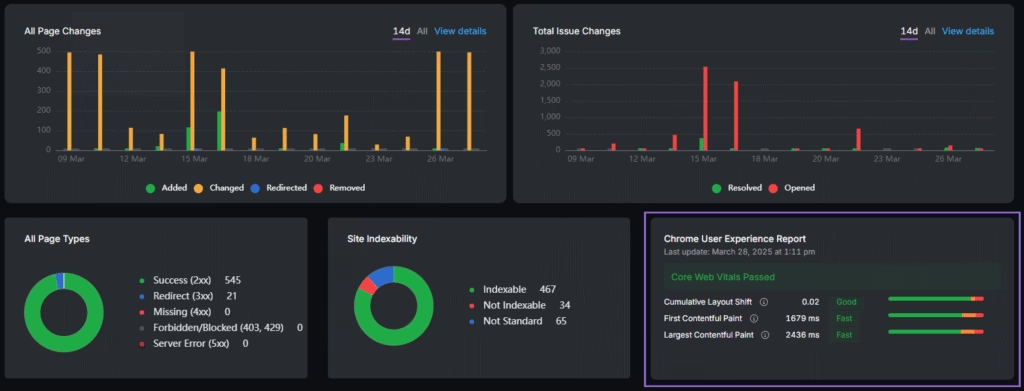
A site audit tool makes this process easier by automatically assessing your website health, identifying Core Web Vitals issues, and providing actionable insights to fix them.
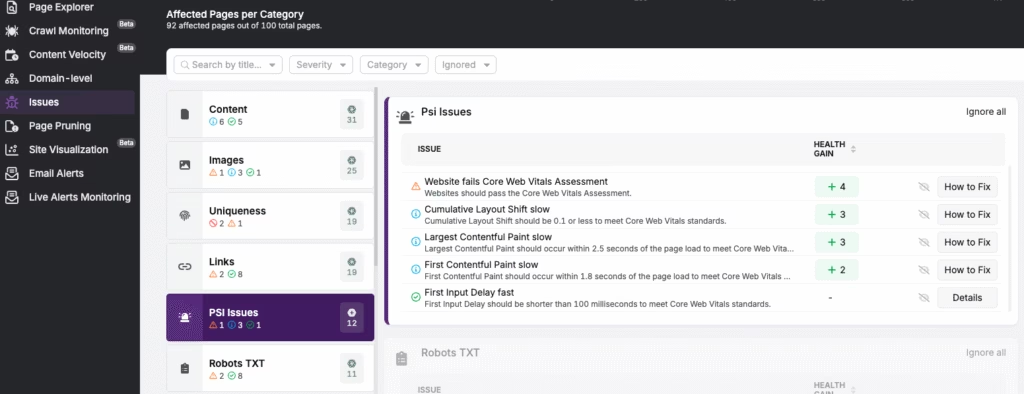
3. Mobile Responsiveness to Boost Engagement
If your site isn’t easy to navigate on a phone or tablet, you’re losing visitors and hurting your search rankings.
In fact, since July 5th, Google is only crawling using Googlebot, which means it’s harder to index and rank pages that aren’t optimized for mobile.
Testing your site’s mobile responsiveness is simple:
- Try it yourself: Open your website on your phone and see how easy it is to browse, click links, and read text.
- Ask others to test it: Have colleagues or friends check your site on different devices and share their experience.
- Use Chrome’s built-in tool: In Chrome DevTools, you can switch screen resolutions to see how your site looks on various devices.
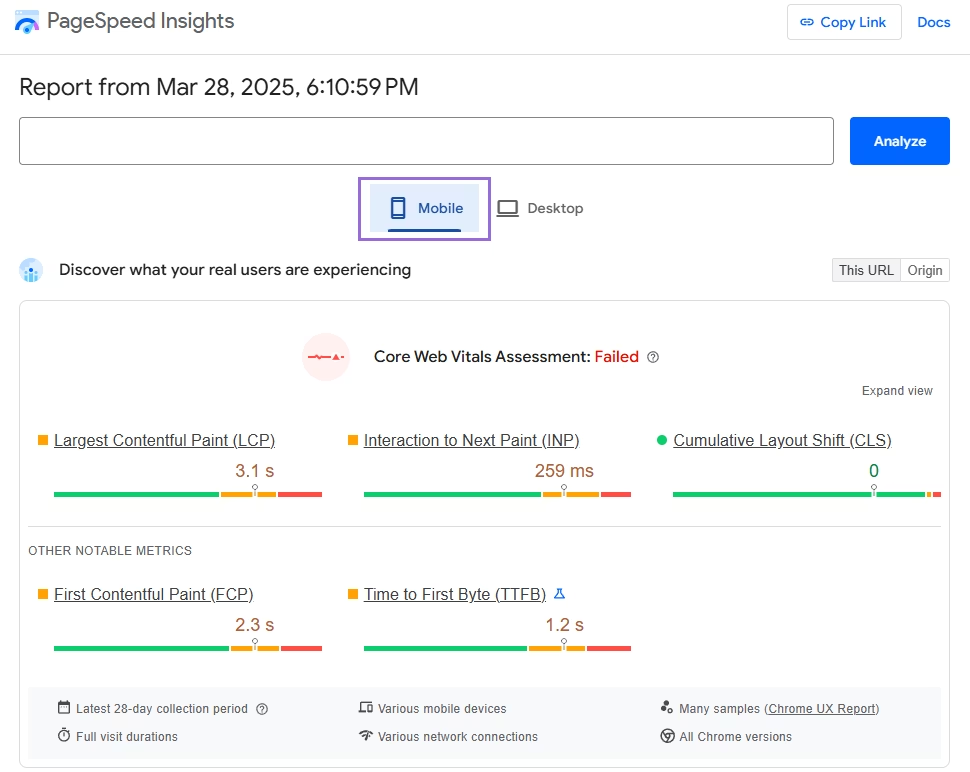
Google PSI mobile analysis provides valuable insights into how your website performs on mobile devices, offering suggestions to improve speed and SEO user experience (UX).
4. Fix Crawlability to Improve Indexing
Crawlability refers to how easily search engines can discover, access, and index your website’s pages. If Google can’t find your pages, it can’t rank them, and that means no organic search traffic for you.
Having a clear sitemap can make it easier for search engines to crawl and find your content.

Next, make sure the pages you want Google to index are actually indexable using the site audit tool.

Check your robots.txt file and any no-index meta tags to ensure you’re not accidentally blocking important pages from being indexed. By making these adjustments, you’ll help search engines find and rank your pages, boosting your visibility in search results.

OTTO SEO offers dynamic indexing, allowing you to index pages with one click on the “Deploy” button, automatically adding them to Google’s index via your homepage footer.
While indexing depends on Google’s timing, this feature ensures your updates are recognized quickly and stay visible in search results.
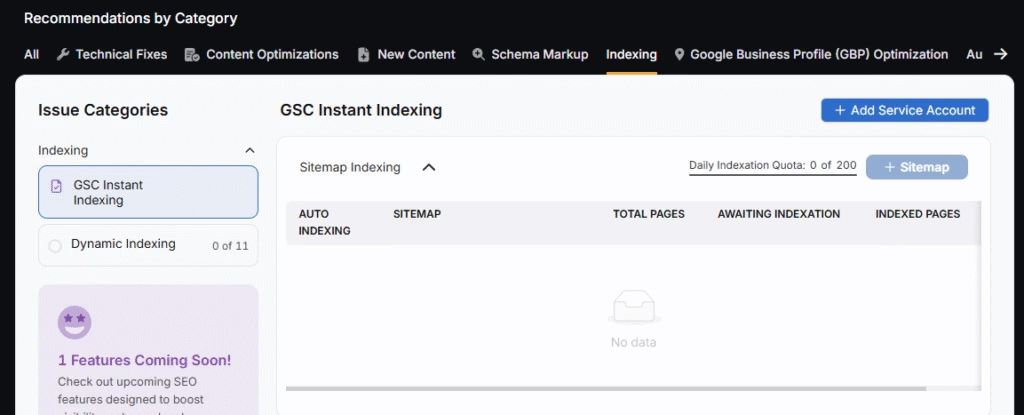
OTTO also provides instant indexing with a 24/7 crawler, submitting up to 200 pages per day using sitemap or URL-based indexing for bulk or specific updates. This boosts your content’s visibility without delays.
5. Eliminate 404 Errors to Enhance Navigation
Internal links are essential to a strong SEO strategy. They help both Google crawlers and users easily navigate through your site and find different pages.
However, these links can sometimes break, leading to frustrating 404 errors. Not only does this annoy visitors, but it also stops Google from crawling your pages effectively.

OTTO SEO automatically detects and fixes broken links and redirects with just a few clicks, completely eliminating the need for manual work.
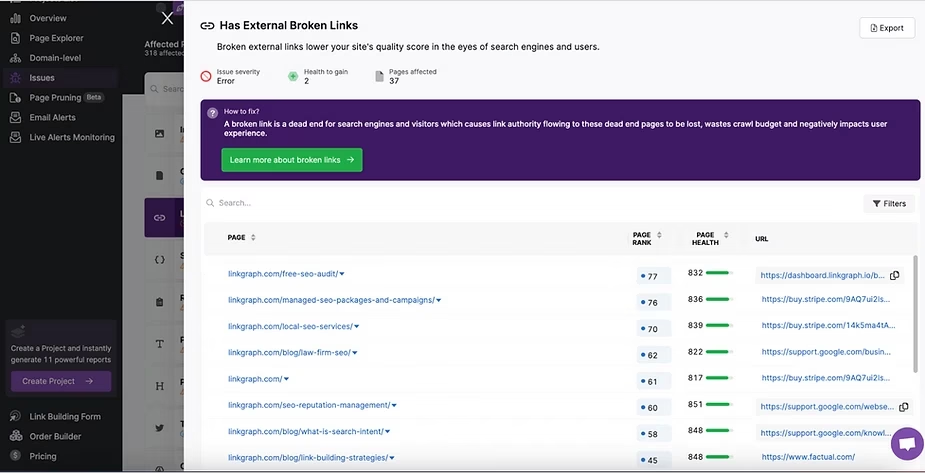
In addition to internal 404s, you might also have external 404s, links to other websites that no longer exist. Make sure to use the SEO audit tool to find and fix them.
6. Increase Website Security to Protect Users
Is your website using HTTP or HTTPS? Website security is crucial today, not just for protecting your site, but also for boosting your search rankings.
If you’re still using HTTP, it’s time to switch to HTTPS and install an SSL certificate to secure your site and improve its health.
An SSL certificate (HTTPS) is essential for both security and building trust with your visitors. A secure site reassures customers and prevents potential hacking, which could harm your brand and reputation. To keep your site safe, here are a few steps you can take:
- Use a Web Application Firewall (WAF), like Cloudbric, to block malicious traffic before it reaches your site.
- If you must store sensitive data, run regular security tests to ensure everything is protected.
- For WordPress sites, install a security plugin like Wordfence to protect against hackers.
- Avoid storing sensitive information, such as credit card details, on your site.
- Choose a web hosting provider that offers SSL certificates.
7. Fix Duplicate Content to Avoid Ranking Issues
Having duplicate content on your website can create serious issues for your site’s health. First off, Google doesn’t like duplicate content.
This may lead to content cannibalization, where pages compete with each other for the same rankings, hurting your site’s overall SEO performance.
Duplicate content is frustrating for users. When visitors encounter the same information across multiple pages, they’re less likely to engage, which can send negative signals to Google and impact your rankings.

To avoid these problems, you can easily use the site audit tool to find duplicate pages and meta tags, ensuring your site stays healthy and optimized.
8. Optimize On-page SEO to Boost Search Rankings
On-page SEO directly impacts website health by improving user experience, increasing visibility in search engines, and ensuring your content is easily accessible and relevant.
There are several key elements that can help improve your website’s visibility and user experience:
- Keyword Research: Find the right keywords that users are searching for.
- High-Quality Content: Invest in content creation to generate informative, engaging content that answers users’ questions and fulfills their needs.
- Content Structure: Organize your content with headings (H1, H2, etc.), paragraphs, and lists to make it easy to read and navigate.
- Internal Linking: Link to other pages on your site to improve navigation and spread page authority.
- Title Tags: These appear in browser tabs and search results; make sure they’re concise, descriptive, and include your main keyword.
- Meta Descriptions: Write short, compelling summaries of your page that encourage users to click.
- Descriptive URLs: Use short, keyword-rich URLs that clearly describe the page’s content.
- Alt Text: Describe your images so search engines understand them.
- Image Compression: Optimize images for faster load times without losing quality.
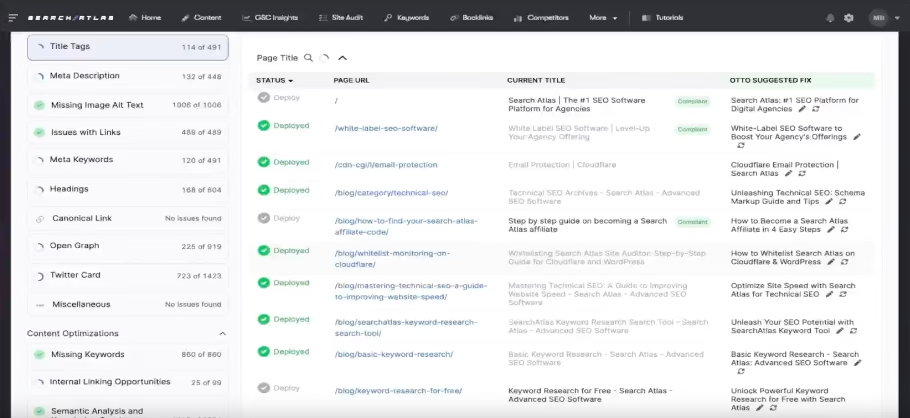
With OTTO SEO, you can easily fix any on-page SEO issues automatically, saving you time and allowing you to focus on bigger strategies.
Ensuring Optimal Website Health with Automation
Maintaining your website’s health is an ongoing process, and there’s always something that needs attention.
With Google’s constant updates and the addition of new pages, keeping your website running smoothly requires regular care. From fixing crawl errors and optimizing speed to ensuring it’s mobile-friendly, staying on top of these tasks is crucial.
But that’s just the start. You also need to focus on keeping your content fresh, optimizing for search engines, and managing user experience. It can be overwhelming to juggle it all.
This is where OTTO SEO makes a difference. Instead of just identifying issues, OTTO automatically takes action to improve your website’s health.
By automating tasks like on-page SEO, content optimization, and technical fixes, OTTO saves you valuable time, letting you focus on what matters most, growing your business.
You no longer have to do all your work manually: Automate most of it with Search Atlas and OTTO; try our FREE trial now!