Track, measure, and maximize brand reach in AI with LLM Visibility
Arman AdvaniArman AdvaniFounder CEO/CTO

What Are Secondary Keywords and How to Find Them

Secondary keywords are often the unsung heroes of SEO, but they hold significant value in driving traffic to your website. These keywords help support and complement your primary target terms, improving your content’s relevance and ranking potential. The chall

Try Search Atlas

Secondary keywords are often the unsung heroes of SEO, but they hold significant value in driving traffic to your website. These keywords help support and complement your primary target terms, improving your content’s relevance and ranking potential. The challenge, however, lies in identifying these terms that can take your content to the next level.

In this post, we’ll explore practical methods for finding secondary keywords and how to use them effectively. 💪

With the right approach, you’ll create content that ranks higher and attracts the right audience.

What Are Secondary Keywords?

Secondary keywords are terms that support your main keyword but aren’t the primary focus of your content. Think of them as related phrases that add depth to your topic and help you rank for a broader range of search queries.

For example, if your main keyword is “organic dog food,” secondary keywords could include “best organic dog food brands,” “organic dog food for puppies,” “grain-free organic dog food,” or “affordable organic dog food options.”

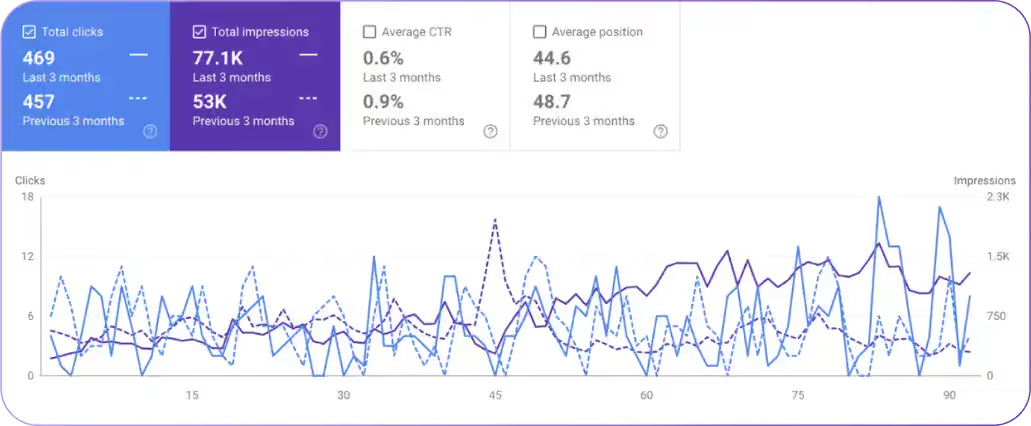
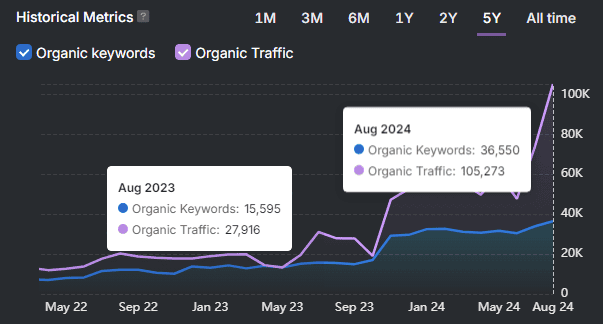
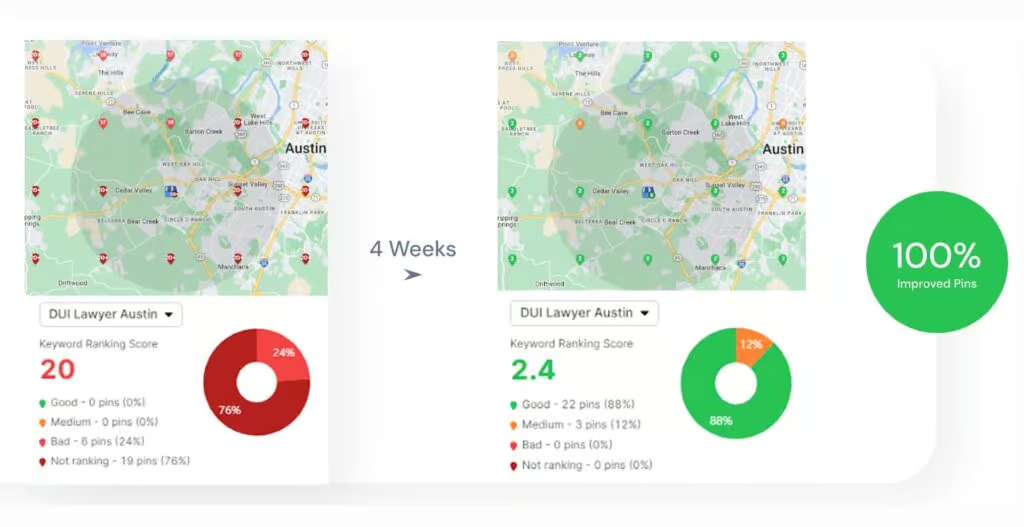
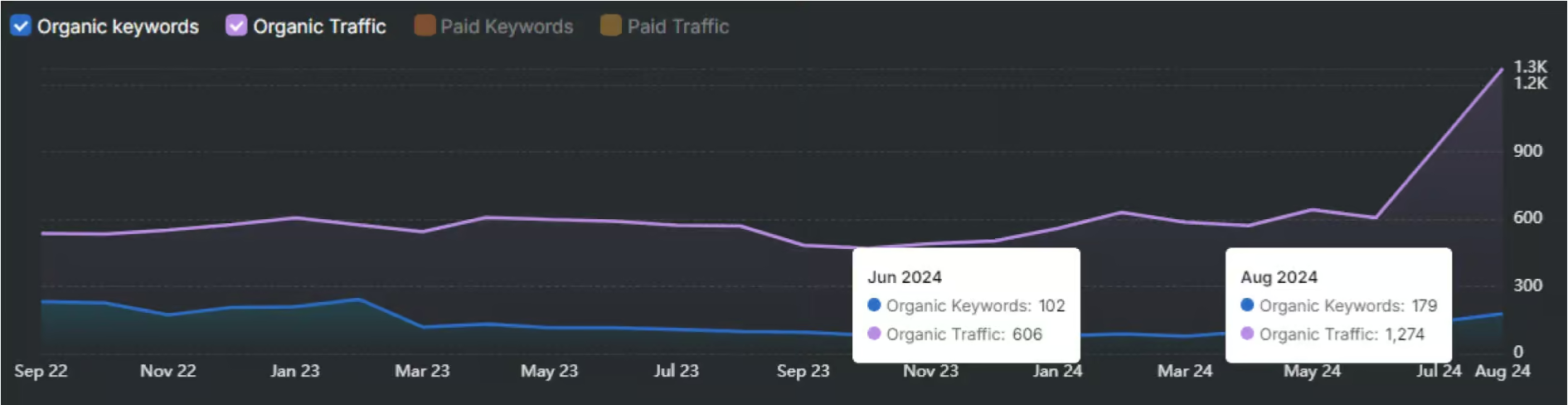
Search Atlas Customer Results Blog Banner

Why Secondary Keywords Matter

Secondary keywords are essential because they help round out your content, which makes it more informative and better aligned with user intent.

While your primary keyword drives the main focus, secondary keywords offer valuable context and broaden the scope of your content, which allows you to cover related topics that potential readers might be searching for.

By strategically incorporating these terms, you’re able to appeal to a wider audience and attract visitors who might not have searched specifically for your primary keyword but are still interested in your content.

Additionally, secondary keywords help search engines understand your topic more thoroughly, which leads to improved rankings. Rather than overloading your content with one main keyword, these supporting terms make your content feel natural and provide SEO value without sounding forced or unnatural.

How Secondary Keywords Differ from Long-Tail, LSI, and Entities

Secondary keywords are often confused with related terms, LSI (Latent Semantic Indexing) keywords, long-tail keywords, and even entities. While secondary keywords are variations of the main keyword to add context, these other terms differ in how they relate to the content.

Here are a few explanations to remove any ambiguity.

Secondary Keywords vs. Long-Tail Keywords

Secondary keywords are broad, closely related terms to your main keyword. Long-tail keywords are more specific, longer phrases targeting narrow searches. For example, if “digital marketing” is your main keyword, a long-tail keyword could be “digital marketing strategies for small businesses.” Long-tail keywords often attract more specific traffic but with less volume than secondary keywords, and both help improve content ranking.

Secondary Keywords vs. LSI Keywords

LSI keywords are related to your main topic but are not direct variations of the main keyword. For example, with “organic gardening,” LSI keywords could include “soil health” or “composting.” LSI keywords provide broader context, while secondary keywords are variations of your main keyword to target more search queries.

Secondary Keywords vs. Entities

Entities are specific terms like “Golden Retriever” or “dog training” that search engines recognize. Secondary keywords, however, are variations or closely related terms to your main keyword.

For example, with “dog training,” secondary keywords might include “puppy obedience” or “canine behavior.” Entities provide context and meaning, while secondary keywords help expand reach.

Still confused? Just remember: each of these serves a different purpose in SEO, so identifying the purpose of a word is the best way to recognize what we’re dealing with.

Now let’s go back to secondary keywords. 😌

How to Find, Choose, and Optimize Secondary Keywords

Finding, choosing, and optimizing secondary keywords is a strategic process. Here are six ways to do it using modern tools. 

1. Look at Competitors

Organic keywords your competitors rank for are a classic way to start the search.

You can pick any page you want to compete with from the SERPs, and copy and paste the URL into the Search Atlas Site Explorer.

Search Atlas Dashboard showing stats from different locations

There, you will get an overview of the page with all the most important details, including organic keywords for the blog.
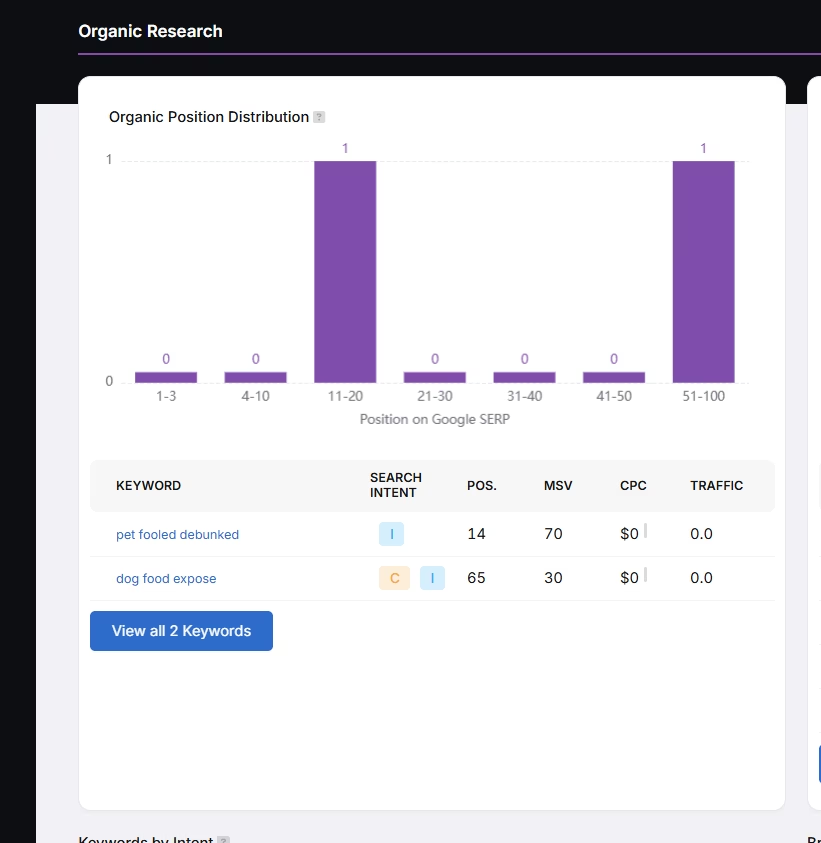
Organic Position Distribution, Search Atlas Site Epxlorer

2. Keyword Magic Tool

Another way to look for secondary keywords is to use the Search Atlas Keyword Magic Tool.

Start with your focus keyword, and the tool will generate related terms that help you expand your content and cover the topic in more detail.

Secondary keywords are also useful for understanding how to structure content, as they can often be used for subheadings.

voip systems Keyword Magic Tool Search Intent

3. Use a Content Editor Tool

Modern SEO content is difficult to imagine without content editor tools that give you optimization tips and scoring while you write. 

Search Atlas has a built-in Content Genius tool that instantly gives you keyword recommendations, as well as the optimal number of times you should use them on the page (also known as keyword density).

If you choose to optimize for a keyword in this tool, you will get the terms automatically, and see them on your right.

content genius terms assistant engaging presentation

4. Look at OTTO Missing Keywords Recommendations

AI-driven tools offer a data-backed approach to keyword research by analyzing vast amounts of data in real-time to uncover high-performing keywords, trending topics, and emerging search patterns.

Our AI Assistant, OTTO SEO, can quickly assess competitors’ websites, extract the keywords they rank for, and highlight keywords you may have missed.

OTTO content optimization dashboard for Missing Keywords

Plus, it helps optimize your content by ensuring the keywords you have used are relevant and that you have added keywords to the right place.

Search Atlas Onpage SEO report showing keyword usage, meta tags, and page structure checks.

This intelligent SEO helper even ensures you’ve successfully avoided keyword stuffing, which gives you a clear overview of each page. 

5. Get Them Automatically with Content Planner

The Search Atlas Content Planner starts with a seed keyword, then generates keyword clusters that highlight related secondary keywords, subtopics, and search intent variations.
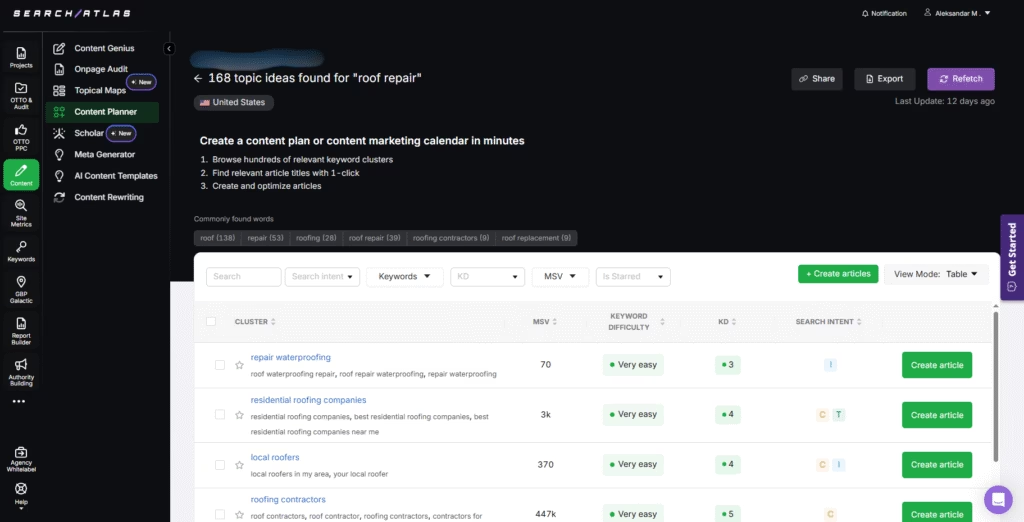
Each cluster (often corresponding to a single article) shows search volume, competition, and intent behind each keyword. 

This means you get secondary keywords automatically uncovered, not just for one topic, but for everything that falls under the broad seed keyword you use. 
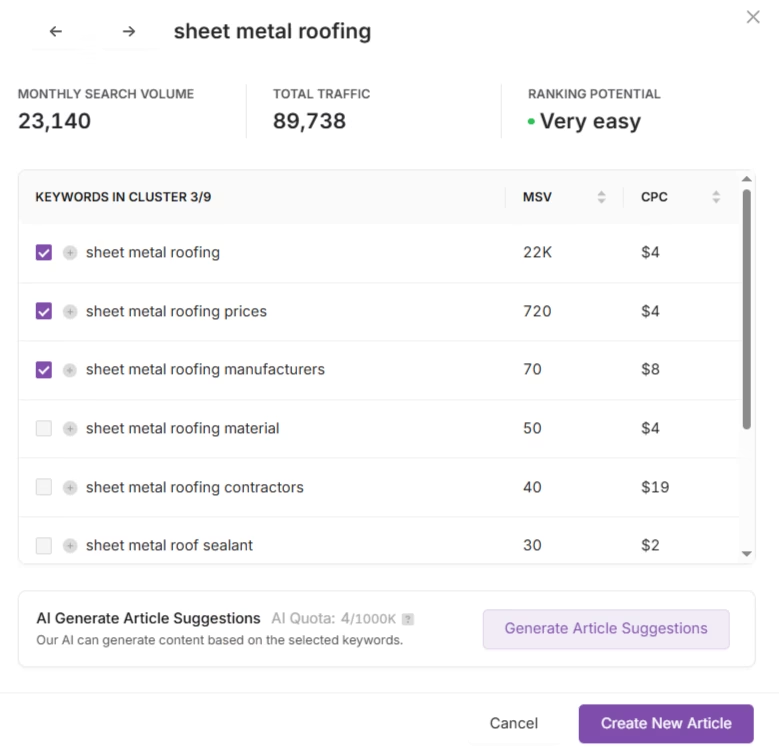
Individual keywords in a Content Planner cluster

And that’s a highly efficient way to identify gaps or missed opportunities in your content strategy.

6. Topical Dominance

This competitor research tool is unique to Search Atlas, and it gives you a completely new way to find keywords. 
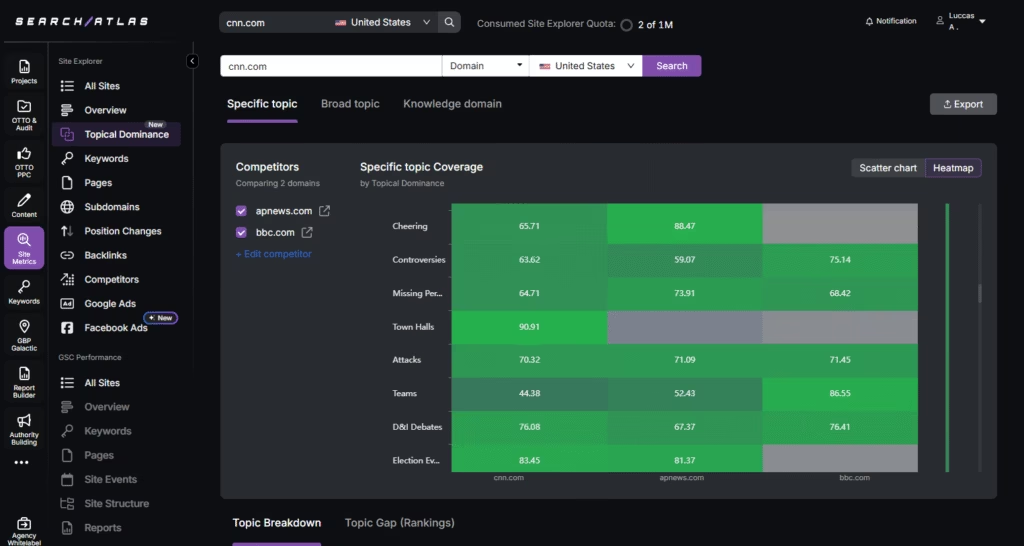
topical dominance tool cnn apnews bbc

It shows you how to cover a topic compared to your competitors, and it gives you competitor keywords for each topic you’ve found.

the search atlas topical dominance tool

That’s one way to save time and get organic keywords that are sure to improve your site authority.

Use Search Atlas AI Tools to Stay One Step Ahead

By targeting secondary keywords, you increase visibility for a variety of search queries and ensure that your content remains comprehensive and aligned with user intent.

With Search Atlas AI tools, finding secondary keywords becomes effortless. The technology does the heavy lifting— it analyzes competitors, discovers gaps, and predicts trends.

Unlock valuable opportunities to boost your content and outsmart the competition. 

Give Search Atlas a test run. Sign up for a 7-day free trial, and get onboarding calls, tutorials, and a full tour of the platform.
Related Reads to Boost Your SEO Knowledge

Agentic AI: What It Is, How It Works and Why It Matters
AI SEO

Agentic AI: What It Is, How It Works and Why It Matters

Agentic AI is a type of artificial intelligence system designed to autonomously pursue defined goals through perception, reasoning, planning, and action with limited human supervision. The agentic AI definition combines generative artificial intelligence, pred

AI Citation Eligibility Optimization: Definition, Signals, and Strategies
AI SEO

AI Citation Eligibility Optimization: Definition, Signals, and Strategies

AI citation eligibility optimization is the structured process of aligning content, entities, authority signals, and technical foundations so AI systems select, cite, and reference a brand inside AI-generated answers. Citation eligibility in AI search means th

Brand Mentions vs Backlinks: Key Differences, SEO, and AI Visibility Impact
SEO

Brand Mentions vs Backlinks: Key Differences, SEO, and AI Visibility Impact

Brand mentions are textual references to a company without required hyperlinks, while backlinks are clickable hyperlinks that transfer link equity and authority. Brand mentions SEO strengthens entity recognition, contextual trust, and AI inclusion probability.

Brand SERP Protection Checklist: How to Control, Defend, and Optimize Your Brand Search Results
SEO

Brand SERP Protection Checklist: How to Control, Defend, and Optimize Your Brand Search Results

Brand SERP Protection is the system that controls how a brand appears across brand search results and protects visibility, accuracy, and trust in Google Search. Brand SERP Protection defines how search systems evaluate entity signals, content alignment, and ex

Hyperlocal Ranking Factors: What They Are and How They Influence Local Search
Local SEO

Hyperlocal Ranking Factors: What They Are and How They Influence Local Search

Hyperlocal ranking factors are the signals that determine how businesses appear in location-specific search results within very small geographic areas. Hyperlocal ranking factors define how search systems evaluate proximity, relevance, and real-world activity

AI Citations vs Mentions: Key Differences, SEO Impact, and Optimization Strategies
AI SEO

AI Citations vs Mentions: Key Differences, SEO Impact, and Optimization Strategies

Key differences, SEO impact, and optimization strategies between AI citations and mentions define how citation artificial intelligence and brand mentions in AI function as distinct authority and visibility signals inside generative search systems. AI citations

Agentic AI: What It Is, How It Works and Why It Matters
AI SEO

Agentic AI: What It Is, How It Works and Why It Matters

Agentic AI is a type of artificial intelligence system designed to autonomously pursue defined goals through perception, reasoning, planning, and action with limited human supervision. The agentic AI definition combines generative artificial intelligence, pred

AI Citation Eligibility Optimization: Definition, Signals, and Strategies
AI SEO

AI Citation Eligibility Optimization: Definition, Signals, and Strategies

AI citation eligibility optimization is the structured process of aligning content, entities, authority signals, and technical foundations so AI systems select, cite, and reference a brand inside AI-generated answers. Citation eligibility in AI search means th

Brand Mentions vs Backlinks: Key Differences, SEO, and AI Visibility Impact
SEO

Brand Mentions vs Backlinks: Key Differences, SEO, and AI Visibility Impact

Brand mentions are textual references to a company without required hyperlinks, while backlinks are clickable hyperlinks that transfer link equity and authority. Brand mentions SEO strengthens entity recognition, contextual trust, and AI inclusion probability.

Brand SERP Protection Checklist: How to Control, Defend, and Optimize Your Brand Search Results
SEO

Brand SERP Protection Checklist: How to Control, Defend, and Optimize Your Brand Search Results

Brand SERP Protection is the system that controls how a brand appears across brand search results and protects visibility, accuracy, and trust in Google Search. Brand SERP Protection defines how search systems evaluate entity signals, content alignment, and ex

Hyperlocal Ranking Factors: What They Are and How They Influence Local Search
Local SEO

Hyperlocal Ranking Factors: What They Are and How They Influence Local Search

Hyperlocal ranking factors are the signals that determine how businesses appear in location-specific search results within very small geographic areas. Hyperlocal ranking factors define how search systems evaluate proximity, relevance, and real-world activity

AI Citations vs Mentions: Key Differences, SEO Impact, and Optimization Strategies
AI SEO

AI Citations vs Mentions: Key Differences, SEO Impact, and Optimization Strategies

Key differences, SEO impact, and optimization strategies between AI citations and mentions define how citation artificial intelligence and brand mentions in AI function as distinct authority and visibility signals inside generative search systems. AI citations

Agentic AI: What It Is, How It Works and Why It Matters
AI SEO

Agentic AI: What It Is, How It Works and Why It Matters

Agentic AI is a type of artificial intelligence system designed to autonomously pursue defined goals through perception, reasoning, planning, and action with limited human supervision. The agentic AI definition combines generative artificial intelligence, pred

AI Citation Eligibility Optimization: Definition, Signals, and Strategies
AI SEO

AI Citation Eligibility Optimization: Definition, Signals, and Strategies

AI citation eligibility optimization is the structured process of aligning content, entities, authority signals, and technical foundations so AI systems select, cite, and reference a brand inside AI-generated answers. Citation eligibility in AI search means th

Brand Mentions vs Backlinks: Key Differences, SEO, and AI Visibility Impact
SEO

Brand Mentions vs Backlinks: Key Differences, SEO, and AI Visibility Impact

Brand mentions are textual references to a company without required hyperlinks, while backlinks are clickable hyperlinks that transfer link equity and authority. Brand mentions SEO strengthens entity recognition, contextual trust, and AI inclusion probability.

Brand SERP Protection Checklist: How to Control, Defend, and Optimize Your Brand Search Results
SEO

Brand SERP Protection Checklist: How to Control, Defend, and Optimize Your Brand Search Results

Brand SERP Protection is the system that controls how a brand appears across brand search results and protects visibility, accuracy, and trust in Google Search. Brand SERP Protection defines how search systems evaluate entity signals, content alignment, and ex

Hyperlocal Ranking Factors: What They Are and How They Influence Local Search
Local SEO

Hyperlocal Ranking Factors: What They Are and How They Influence Local Search

Hyperlocal ranking factors are the signals that determine how businesses appear in location-specific search results within very small geographic areas. Hyperlocal ranking factors define how search systems evaluate proximity, relevance, and real-world activity

AI Citations vs Mentions: Key Differences, SEO Impact, and Optimization Strategies
AI SEO

AI Citations vs Mentions: Key Differences, SEO Impact, and Optimization Strategies

Key differences, SEO impact, and optimization strategies between AI citations and mentions define how citation artificial intelligence and brand mentions in AI function as distinct authority and visibility signals inside generative search systems. AI citations

Visualize Your SEO Success: Expert Videos & Strategies

Ready to Replace Your SEO Stack With a Smarter System?

If Any of These Sound Familiar, It's Time for an Enterprise SEO Solution:

  • 25 - 1000+ websites being managed
  • 25 - 1000+ PPC accounts being managed
  • 25 - 1000+ GBP accounts being managed