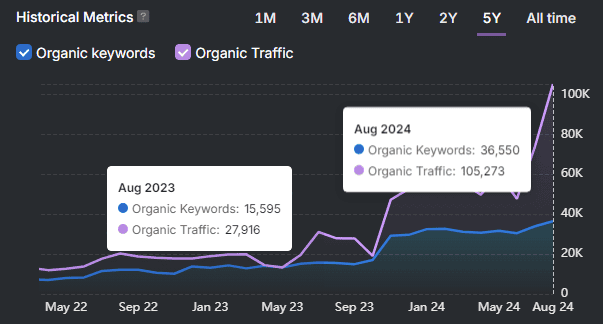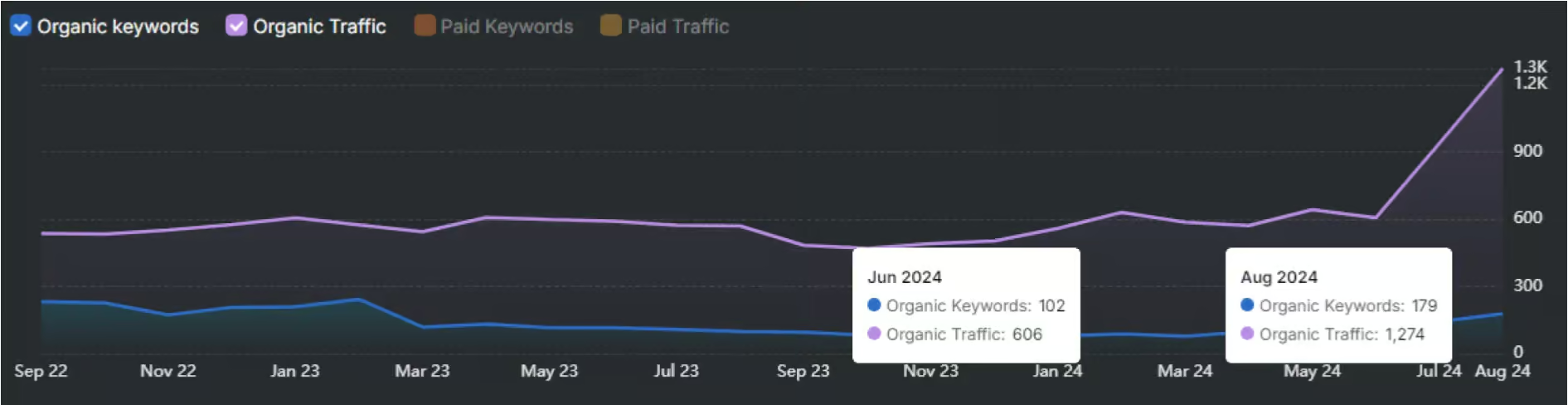
SEO for SaaS refers to optimizing internet-based software platforms so potential customers easily discover them online. SaaS companies compete in a digital marketplace where multiple providers offer similar solutions, and buyers often evaluate options across long, research-heavy sales cycles.
Search Atlas for SaaS provides the visibility needed to capture demand from high-intent searches. Inside this guide, you will learn how Search Atlas helps you optimize technical performance, publish content that educates decision-makers, expand reach in global markets, and deliver reports that connect organic growth to revenue.
What is SEO for SaaS?
SEO for SaaS is a digital marketing strategy that increases the search visibility of software platforms delivered online. SEO for SaaS improves rankings for solution-focused queries, attracts qualified traffic from search engines, and drives trial sign-ups or customer conversions.
SaaS SEO differs from traditional SEO because software companies must win visibility for highly competitive, solution-aware keywords while appealing to both B2B and B2C buyers.
SaaS companies need to stand out in saturated markets, and support prospects through every stage of the funnel. Effective SaaS SEO relies on technical precision, authoritative content, and scalable execution that turns search visibility into recurring revenue.
Search Atlas for SaaS helps overcome these challenges by unifying keyword research, automating technical audits, scaling content optimization, and connecting SEO performance to customer acquisition and recurring revenue.
What Makes Search Atlas for SaaS Different?
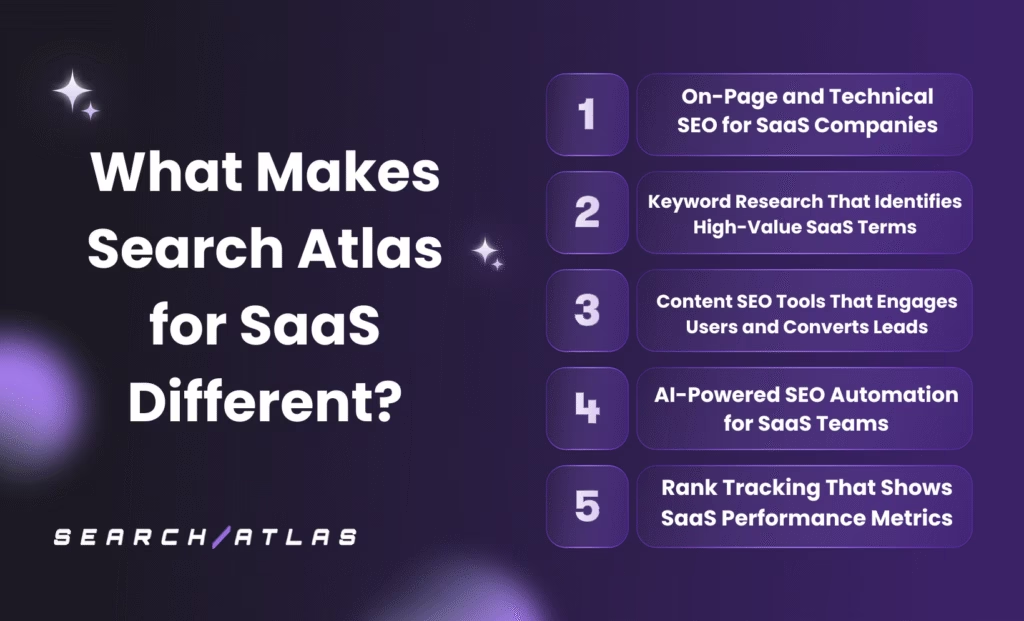
Search Atlas is built for SaaS companies because it unifies automation, scalability, and precision into a single platform. Most SEO tools focus on broad use cases and overlook the unique challenges SaaS businesses face.
SaaS teams need technology that supports rapid feature launches, handles complex technical sites, and delivers measurable results across global markets. Search Atlas combines enterprise-level SEO capabilities with workflows adapted to SaaS growth models.
The 5 main ways Search Atlas for SaaS helps companies scale SEO performance and reduce acquisition costs are listed below.
1. On-Page and Technical SEO for SaaS Companies
On-page and technical SEO for SaaS platforms ensure websites remain discoverable and user-friendly. On-page optimization manages metadata, content structure, and keyword alignment, while technical optimization secures site speed, mobile responsiveness, crawlability, and indexability.
Search Atlas brings on-page and technical optimization together, which enables teams to track page-level quality and overall site health in one place.

Search Atlas On-Page Audit tool evaluates individual pages for metadata, headings, internal linking, and page speed. Each report generates clear scores with keyword-focused recommendations that strengthen page visibility.
Search Atlas Site Auditor scans entire domains to measure crawlability, indexability, and technical stability. It highlights issues such as redirect chains, duplicate tags, and non-indexable pages, while suggesting fixes and ranking impact.
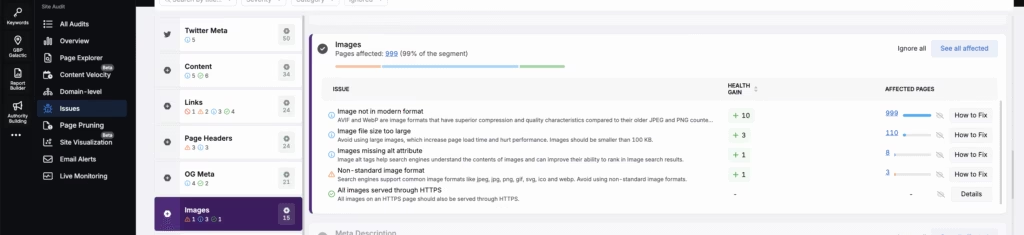
SaaS companies using Search Atlas On-Page Audit and Site Auditor tools maintain organized site structures, improve keyword targeting, and build smooth pathways for both users and search engines.
2. Keyword Research That Identifies High-Value SaaS Terms
Keyword research for SaaS focuses on the search terms real users type when evaluating software solutions. Keyword research for SaaS focuses on intent-based and long-tail terms rather than generic phrases, attracting qualified leads and matching specific user needs.

To streamline this process, Search Atlas includes specialized tools designed to simplify keyword discovery and refine targeting.
Search Atlas Keyword Research Tool offers access to more than 5.2 billion terms, tracks search intent, and evaluates difficulty based on backlink and content signals. SaaS marketers use keyword research to balance broad awareness keywords with technical product terms.

Search Atlas Keyword Magic Tool accelerates expansion from a single seed phrase with AI-driven variations and adjacent topics. SaaS teams use it to uncover niche feature queries and solution-specific comparisons.
Search Atlas Keyword Gap Tool compares up to 6 domains at once to highlight missing terms. It reveals overlapping rankings, untapped opportunities, and high-value keywords that competitors already own.
SaaS teams using these tools create structured keyword portfolios that support campaign growth. The combined insights show which terms convert, which clusters demand more coverage, and where competitors set the benchmark for visibility.
3. Content SEO Tools That Engages Users and Converts Leads
Content SEO for SaaS involves creating landing pages that convert while publishing authoritative articles that explain technical and complex concepts with clarity. Search Atlas equips SaaS companies to create landing pages that convert and publish content that demonstrates subject-matter authority.

Search Atlas AI Landing Page Builder generates fully optimized landing pages for features, solutions, or competitor comparisons. It uses AI-driven templates that follow on-page SEO practices and connect directly to CMS platforms for seamless publishing.
Search Atlas Content Genius builds authoritative articles with real-time SERP data and NLP signal matching. It applies keyword mapping, semantic scoring, and topical clustering to ensure every draft matches how search engines measure relevance and depth.
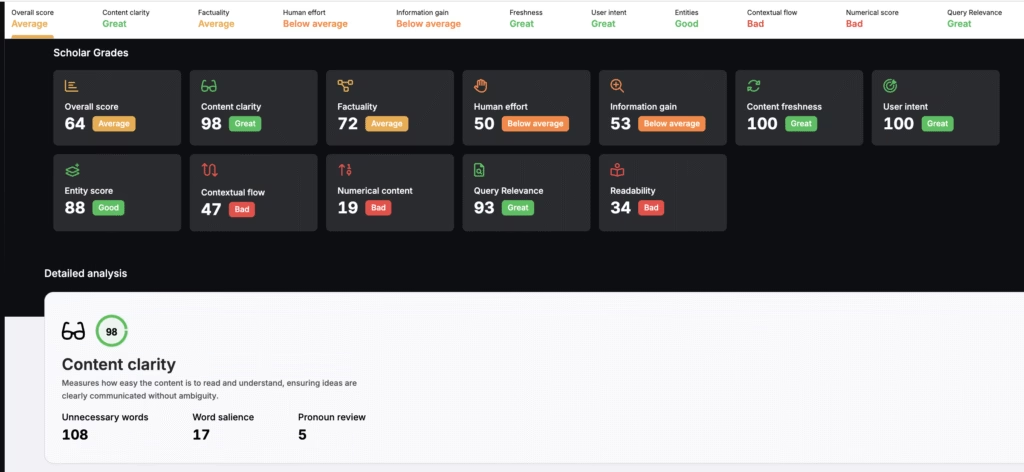
Search Atlas SCHOLAR reviews each article before publication to confirm factual clarity, semantic structure, and contextual depth. It ensures SaaS content passes quality standards that search engines reward for trust and visibility.
SaaS teams that combine Search Atlas tools gain clarity on which landing pages to create, which blogs expand, and how to validate content authority before publishing.
4. AI-Powered SEO Automation for SaaS Teams
SEO automation supports SaaS teams by reducing manual work, improving accuracy, and accelerating execution. Automated workflows replace repetitive tasks like keyword checks, content updates, and technical fixes.
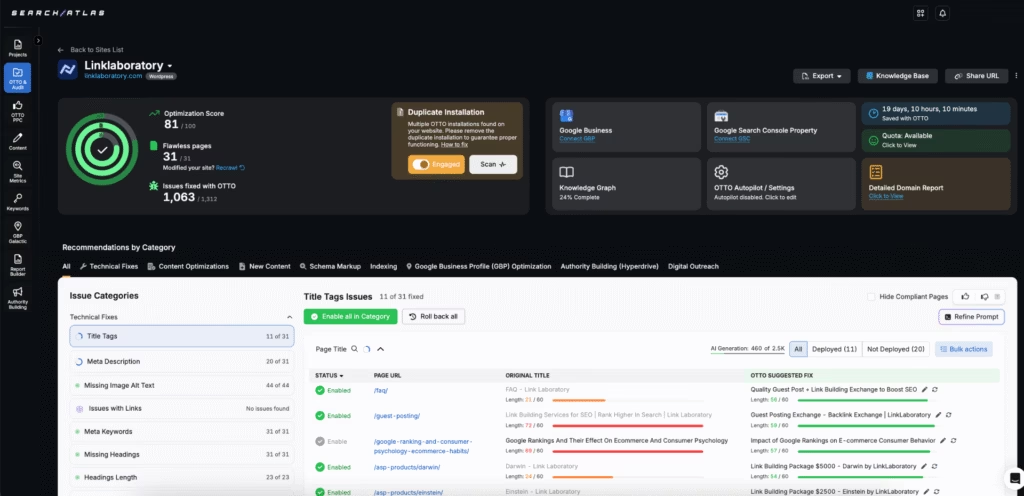
Search Atlas introduces OTTO SEO, an AI-powered automation system that manages technical, content, and authority signals at scale. OTTO SEO connects to Google Search Console (GSC) and uses Knowledge Graph inputs to understand brand priorities.
OTTO SEO audits each site for issues and automatically applies fixes. It adjusts metadata, optimizes internal linking, resolves canonical errors, and rewrites titles or descriptions without manual edits.
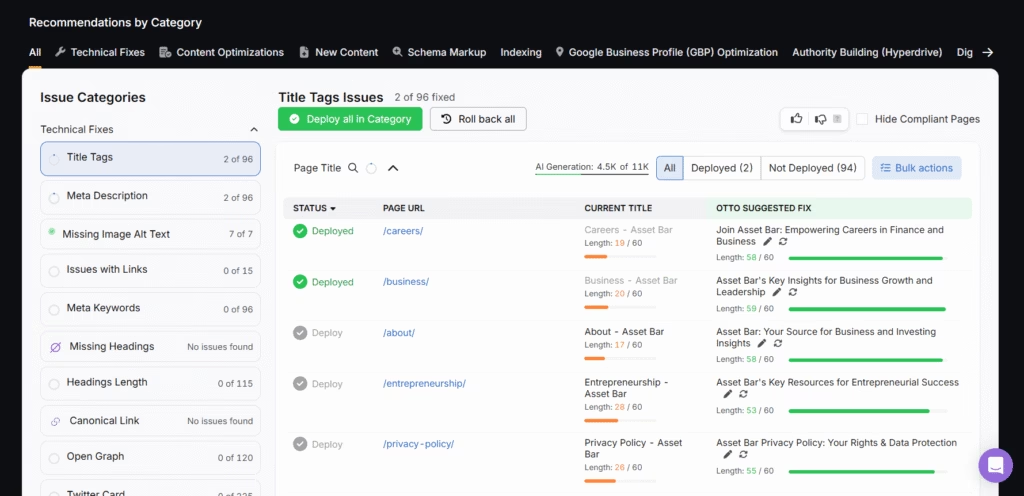
SaaS teams that adopt OTTO gain a system of ongoing SEO execution. Its automation reduces the lag between identifying an issue and implementing the solution, which gives SaaS companies faster feedback loops and more reliable performance gains.
5. Rank Tracking that Shows SaaS Performance Metrics
Rank tracking for SaaS measures performance against target keywords and competitors, revealing visibility, traffic drivers, and performance gaps. With Search Atlas, teams track rankings, traffic signals, and keyword trends in one platform to shape strategies that lower acquisition costs and support growth.
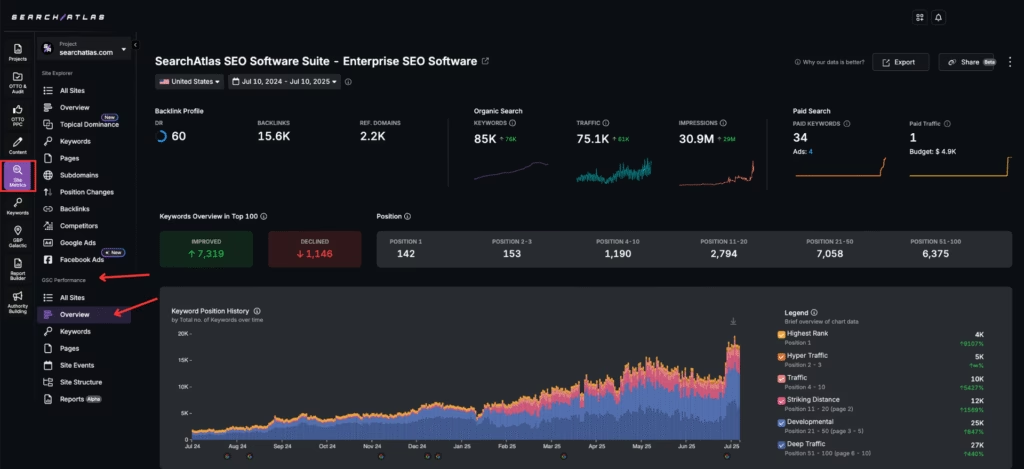
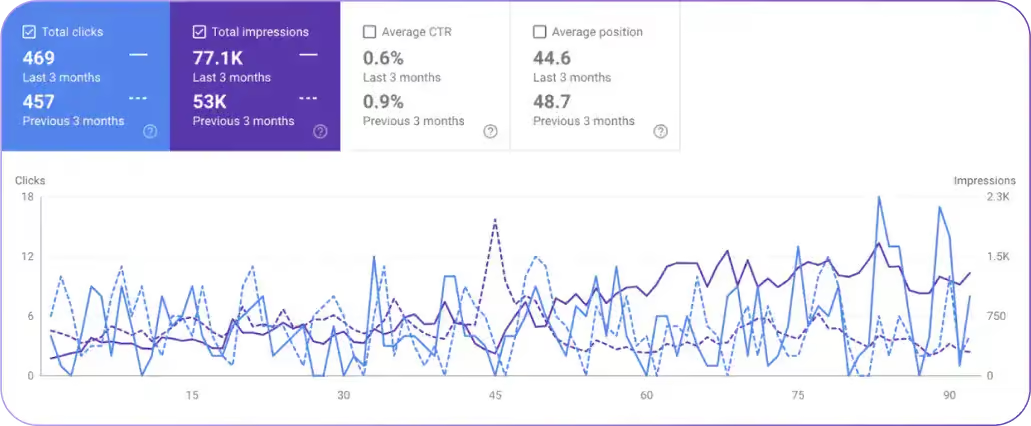
The Search Atlas GSC Performance tool connects data from GSC and Google Analytics. It reports impressions, clicks, CTR, and ranking shifts while filtering results by branded terms, query type, or URL group.
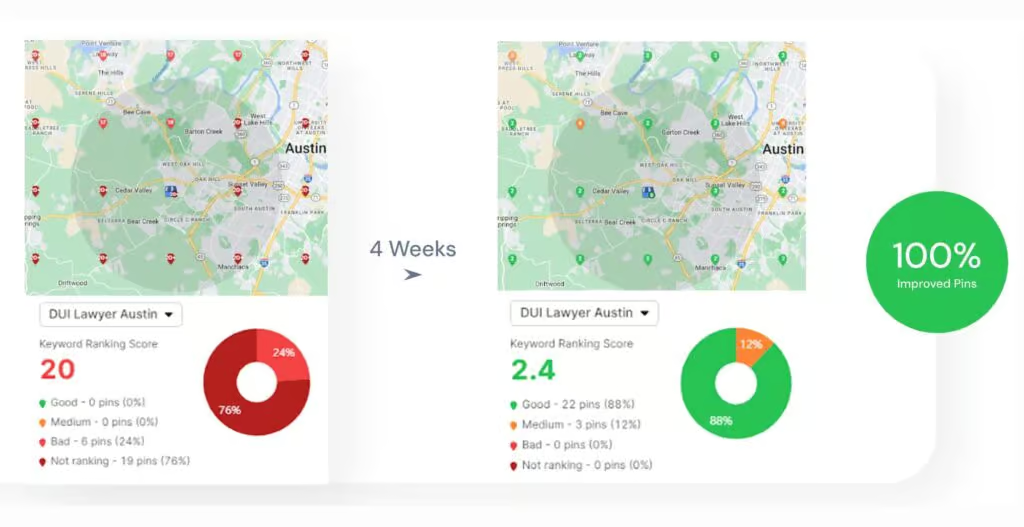
Search Atlas Keyword Rank Tracker measures keyword positions, visibility, and traffic potential with daily updates. It tracks movements across devices, locations, and competitors, while detecting changes in SERP features that affect SaaS search visibility.
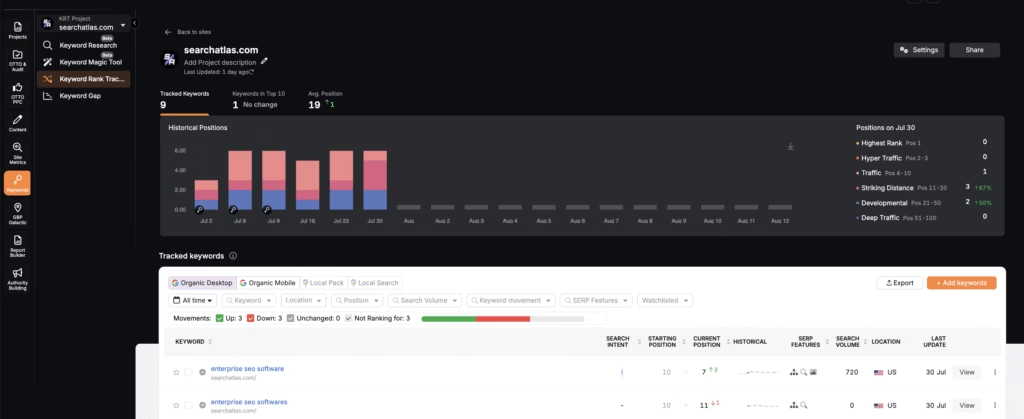
SaaS teams that track performance with Search Atlas gain clarity on ranking movements, understand which keywords convert, and adjust campaigns to strengthen visibility against competitors.
Why SaaS Companies Trust Search Atlas
SaaS companies trust Search Atlas because the platform simplifies complex SEO into a system that supports growth at scale. The main reasons SaaS companies choose Search Atlas are listed below.
- SaaS teams save time as OTTO automates routine fixes, content updates, and ranking checks without requiring large SEO teams.
- Companies scale faster with tools that adapt to new product launches, feature pages, and international markets.
- Every campaign stays measurable through integrated GSC and GA4 data that connects rankings, traffic, and conversions.
- SaaS marketers act on insights that highlight competitive gaps, technical issues, and high-value opportunities across the funnel.
SaaS companies gain sustainable growth with a platform built for automation, scalability, and reliable execution in competitive software markets.
How Much Does Search Atlas Cost?
Search Atlas provides flexible plans that support SaaS companies at different stages of growth. Every plan starts with a 7-day free trial that gives full access without requiring a credit card.
The Search Atlas pricing options are outlined below.
- The Starter plan works well for lean SaaS teams launching their first campaigns. It includes essential tools, baseline automation, and live reporting for $99 per month.
- The Growth plan suits SaaS companies managing multiple features or regions. It expands usage limits, unlocks advanced automation, and adds deeper analytics for $199 per month.
- The Pro plan is built for fast-scaling SaaS businesses with complex websites. It offers unlimited projects, complete automation, white-labeled dashboards, and priority support for $399 per month.
- Enterprise plans serve SaaS providers with custom requirements. They include tailored quotas, API integrations, and dedicated onboarding, with pricing available on request.
All plans grant access to the full platform, including automation, technical SEO, content optimization, backlink tools, local visibility, and live reporting. There are no upsells or hidden charges.
SaaS companies exploring Search Atlas experience how automation, reporting, and integrated tools simplify SEO and reduce acquisition costs. Try your free trial of Search Atlas for SaaS today!