When it comes to online advertising, precision is everything. And if you’re here, you’re probably considering Google Ads, good call! 👍
But before you dive in, you need to understand the key difference between Search Ads vs Display Ads so you can make the most of your budget.
So, what’s the deal with these two types of ads? Search ads show up on Google’s search results when someone types in a related keyword, like a personal trainer’s ad appearing when someone searches for “best workout plan.”
Display ads, on the other hand, appear across websites, apps, and YouTube, catching users’ attention while they browse, think of a fitness brand’s banner ad on a health blog.
Which one is better? Can you use both? (Spoiler: Yes). Next, we’ll break down exactly what search ads and display ads are, and how the right PPC tools can help you maximize your ROAS.
What Are Search Ads?
Search ads put your business in front of people who are already searching for what you offer. These ads appear at the top and bottom of Google’s search results when users type in relevant keywords.
Instead of hoping someone stumbles upon your website, search ads let you target people with intent, those actively looking for solutions. 🔍
Every time someone clicks, you pay, making search ads a direct, measurable way to attract customers. For example, if someone searches for “best smart thermostat,” an ad from a home automation brand could appear before any organic results.
Because these ads are keyword-driven, they connect businesses with high-intent users at the right moment.

Search Ads Benefits and Features
Search ads help businesses connect with the right audience at the right time, ensuring every dollar spent reaches people actively looking for their products or services.
- Precise Targeting: Ads appear only to users actively searching for relevant keywords, reducing wasted ad spend.
- Local Reach: Businesses can focus on specific geographic areas, making search ads ideal for local service providers. In this case, you can also use local SEO tools.
- Immediate Visibility: Ads show up instantly in search results, providing quick exposure without waiting for SEO to take effect.
- Budget Control: Set daily limits and adjust spending as needed to keep costs in check.
- High Intent Traffic: Users clicking on search ads are often ready to take action, which leads to more conversions.
- Measurable Performance: Track clicks, conversions, and costs in real time, so it’s easy to optimize campaigns.
Search Ads Pricing
Search ads costs depend on industry, competition, and targeting. In 2025, businesses spend between $100 and $10,000 per month, with clicks averaging $0.11–$0.50 and 1,000 impressions ranging from $0.51 to $1,000.
Competitive industries like law have higher costs, while niche markets like handmade chocolates are cheaper.
What are Display Ads?
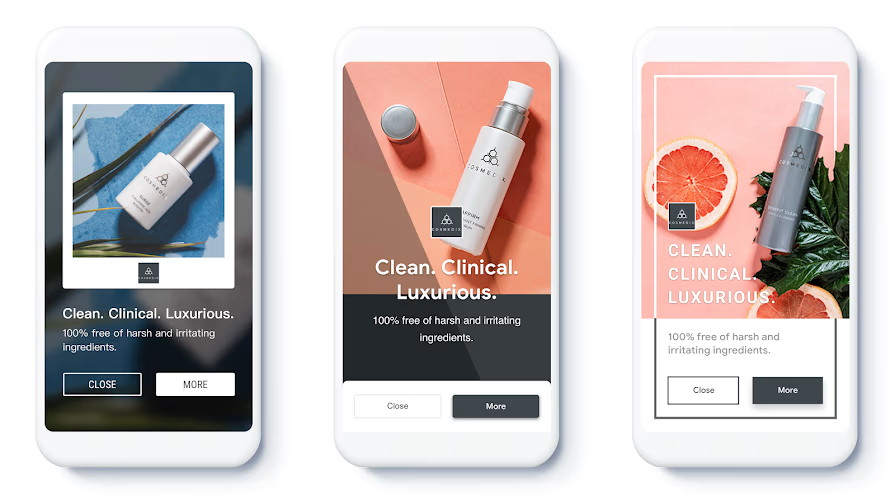
Display ads are paid ads that appear across websites, blogs, social media platforms, and apps. They help promote your brand by reaching people across various digital spaces, so the awareness about your products and services grows.
Unlike search ads, display ads can catch attention with visual elements like images, YouTube shorts and videos, or even interactive features, making them more engaging. 🎞️
They can target users at different stages of their buying journey, such as encouraging visits to your store or re-engaging users who abandoned their shopping carts. Because display ads focus on visuals, they can often have a greater impact, guiding prospects through your sales funnel in a more dynamic way.
Display Ads Benefits and Features
Display ads allow businesses to increase their brand visibility and connect with potential customers using visually engaging content across various digital spaces:
- Brand Awareness: Display ads help introduce and reinforce brand messages to both new and existing audiences.
- Targeting: Ads can be targeted based on user demographics, interests, location, and behavior for precise reach.
- Cost-Effectiveness: Display ads are often affordable with flexible payment terms, making them accessible for various budgets.
- Visual Appeal: The design and style of display ads capture attention and communicate a clear message.
- Retargeting: Ads can be shown to users who have previously interacted with the brand or visited its website.
- A/B Testing: Display ads allow for testing different creatives and targeting strategies to improve performance.
Display Ads Pricing
Display ads on the Google Display Network (GDN) are considered an affordable tool and typically cost $0.50 to $1.00 per click (CPC) or $0.50 to $4.00 per 1,000 impressions (CPM), depending on targeting, industry, and ad quality.
The average CPC is about $0.58, but it can range from $0.19 to $4 per click, depending on the industry. CPC is the cost paid each time someone clicks your ad.
Search Ads vs Display Ads: How to Make the Best Decision for Your Business
We’ll explore the key differences between search ads and display ads, and later, we’ll reveal how to automate your processes for even better results.
1. Conversion Rate
Search ads typically have a conversion rate of around 4.2%, significantly higher than other ad formats. With properly understood keyword intent, they target users actively searching for specific products or services, making them more likely to convert.
Conversion rates can vary by industry, with some exceeding 10%, making search ads highly efficient for driving immediate actions like purchases or lead generation.
Display ads usually have a lower conversion rate, averaging 0.55% to 0.77%. These ads reach a broader audience, often those not actively searching for specific products.
While their primary goal is brand awareness, they can still generate conversions, but they typically lag behind search ads in terms of immediate customer action.
Winner: Search Ads
Search ads outperform display ads due to their higher conversion rates, averaging 4.2%.
By targeting users actively searching for products, search ads are more effective in driving immediate actions like purchases or leads.
2. Formats
Search ads come in various formats designed to meet different goals on the SERPs. These formats enhance visibility and engagement based on user intent:
- Text Ads: Traditional text ads on SERPs with a “Sponsored” label.
- Responsive Search Ads: Ads with dynamic combinations of headlines and descriptions.
- Dynamic Search Ads: Automatically generated ads based on website content.
- Call Ads: Focus on driving phone calls directly from SERPs.
- Shopping Ads: Product ads displaying images, prices, and names.
- Performance Max: Campaign type with broad reach across all Google Ads inventory.
Display ads use various formats to visually engage users across websites, apps, and social platforms, perfect for brand awareness and engagement:
- Banner Ads: Static or animated image ads.
- Native Ads: Blend with site content.
- GIF Ads: Animated images for visual appeal.
- Interactive Ads: Require user interaction.
- Video Ads: Ads in video format.
- Rich Media Ads: Combine video, audio, and clickable elements.
- Expandable Ads: Reveal more information when clicked.
- Responsive Ads: Adapt to available ad space.
- Floating Ads: Overlay ads that can be moved or closed.
- Peel-back Ads: Reveal additional content on interaction.
Winner: Display Ads
Display ads excel in brand awareness and user engagement with formats like video and interactive ads, making them ideal for reaching a wider audience and building long-term relationships.
3. Pricing
Search ads typically follow a pay-per-click (PPC) model, where businesses are charged each time someone clicks on their ad. Costs vary by industry, typically ranging from $1 to $5 per click.
Display ads are usually priced on a cost-per-thousand-impressions (CPM) basis, meaning you pay for every 1,000 times your ad is displayed, with an average cost of less than $1.
Winner: Search Ads
Search ads provide highly targeted engagement, making them more efficient. We’ll teach how to make your campaign more cost-effective and maximize your return on ad spend (ROAS) with AI-driven optimization strategies later in this article.
4. Sales Cycle
Search ads are effective for short sales cycles as they capture users during their research phase, leading them to make quick decisions. Once engaged, continuous advertising isn’t necessary, as the decision-making process is often swift.
Display ads are ideal for longer sales cycles, as they build brand awareness and stay in front of users over time. They help keep your brand top of mind, which is crucial for products requiring more consideration before purchase.
Winner: Depends on your goals
The winner depends on your goals, search ads excel for quick conversions, while display ads are better for longer decision-making processes, ensuring brand recall.
5. Targeting
Search ads primarily rely on keyword-based targeting, with optional additional targeting choices for more precise reach. These include:
- Keyword Targeting: Ads show based on search terms.
- Audience Targeting: Based on demographics, interests, and behaviors.
- Location Targeting: Reach users in specific geographic areas.
- Device Targeting: Target ads to mobile, desktop, or tablet users.
- Time Targeting: Show ads at specific times.
- Content Targeting: Target specific types of content or websites.
- Dynamic Search Ads: Automatically generated ads based on website content.
Display ads are designed to reach specific audiences across the GDN based on various targeting options:
- Audience Targeting: Demographics, interests, in-market audiences, retargeting.
- Content Targeting: Target ads by topic, placement, or keywords.
- Optimized Targeting: Google expands reach based on campaign data.
- Geo-targeting: Ads shown based on location.
- Time Targeting: Show ads at specific times of the day.
- Device Targeting: Ads are targeted by device type.
Winner: No clear winner
Choosing between search and display ads depends on your goals: Search ads work better for immediate intent, while display ads excel at building awareness.
Both strategies can complement each other depending on your needs.
Search Ads vs Display Ads: How AI Can Make Your Strategy More Lucrative
Boost your ROAS by automating your Search Ads, so you can spend more time improving your Display Ads strategy. OTTO Google Ads, a powerful AI tool, helps you optimize Search Ads effortlessly, improving results across both channels.
What Is OTTO Google Ads?
OTTO Google Ads is an AI-powered tool by Search Atlas that streamlines the process of creating effective Google Ads campaigns with just a few clicks.

By analyzing your website, selecting top-performing keywords, organizing ad groups, and crafting optimized ad copies, OTTO Google Ads makes campaign management quick and easy for any business.
What Tasks Does OTTO Google Ads Automate?
OTTO Google Ads eliminates the complexity of running Google Ads by automating every step: from campaign setup to generating compelling ad copy.
It reviews your site, organizes ad groups, chooses the best keywords (including trending keywords), and writes optimized ads tailored to your business goals, saving you time and effort.

With OTTO Google Ads, launching high-performing campaigns takes only a few clicks, without the usual hassle and time investment.
OTTO Google Ads uses AI to do the hard work for you, making paid advertising faster, more efficient, and more profitable than traditional PPC tools.
How Does OTTO Google Ads Recommend Strategies?
OTTO Google Ads uses AI to analyze your site, audience, and goals. Just connect your site and Google Ads account, and its machine learning engine will find the best campaign setup, keywords, and ad copy for you.
It continuously refines your ads to improve relevance, click-through rates, and conversions, maximizing your ROI with minimal effort.
OTTO Google Ads Pricing
Search Atlas offers a complete suite of SEO, outreach, and content tools along with OTTO Google Ads at a highly competitive price, making it a more cost-effective solution than other platforms.
| Starter plan | Growth plan | Pro plan | |
| Price: | $99 monthly | $199 monthly | $399 monthly |
| Free OTTO Activation | 1 | 1 | 3 |
| User Seats | 2 | 3 | 5 |
| GSC Sites | 5 | 15 | Unlimited |
| GBP Accounts | 3 | 10 | 25 |
| Regular AI Quota | 100 | 250 | Unlimited |
| Keywords per Site | Top 10K | Top 100K | Top 1M |
| Keyword Rank Tracking Projects | 20 | 50 | 1000 |
Search Ads vs Display Ads: The Right Choice is Automation
Search Ads and Display Ads each serve unique purposes depending on your business needs. While Search Ads can be more effective in certain situations, Display Ads shine in others.
However, you can leverage both strategies to maximize your ROI by focusing on optimizing one of them.
OTTO Google Ads allows you to do just that. This cutting-edge AI not only delivers optimized strategies for your campaigns but also fully automates the entire process, saving you time and effort. 💰
With just a few clicks, you can create hundreds of fully optimized campaigns tailored to your business goals.
Why not give it a try and see how it works? Try OTTO Google Ads for FREE with our free trial!