Track, measure, and maximize brand reach in AI with LLM Visibility
Arman AdvaniArman AdvaniFounder CEO/CTO

New Site SEO Checklist to Improve Visibility from Day One

Many businesses launch a site without considering how customers will find it, missing out on crucial organic traffic from day one. This new site SEO checklist offers a structured guide for building a strong SEO foundation from the ground up. Use these essentia

Try Search Atlas

Many businesses launch a site without considering how customers will find it, missing out on crucial organic traffic from day one. This new site SEO checklist offers a structured guide for building a strong SEO foundation from the ground up.

Use these essential steps to ensure your new website is visible, authoritative, and ready to connect with your target audience effectively. Whether you’re an agency, a business owner, or a developer, this checklist works across all industries, platforms, and CMS setups.

Simple SEO Checklist for New Websites

Following these steps will help you configure your new site correctly, target the right customers, and build long-term authority in search engine results.

1. Choose a CMS That Supports SEO

A Content Management System (CMS) is the platform that powers your site and lets you create and manage content. Examples include WordPress, Shopify, Wix, Webflow, Squarespace, and custom CMS setups.

Choose the CMS that allows you to control SEO settings like page titles, meta descriptions, URLs, and image alt text. WordPress is popular for flexibility, Shopify is designed for ecommerce, and custom CMS options work best for developers.

If you pick the wrong CMS, it becomes harder to optimize your content, apply structured data, or connect to tools like Google Search Console (GSC).

2. Set Up Essential Analytics & Tracking Tools

Analytics tools are free platforms from search engines that help you measure site performance. Without data, you can’t improve, which is why setting up Google Search Console (GSC) and Google Analytics (GA4) is non-negotiable for a new site.

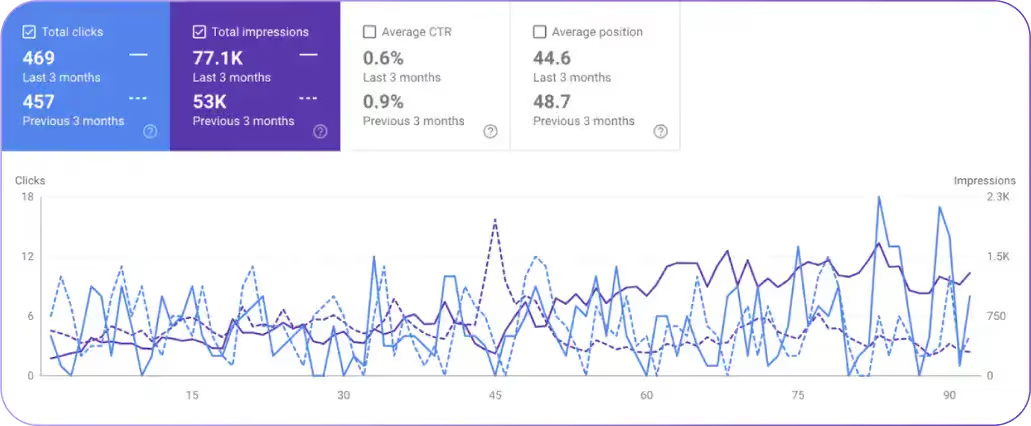
GSC connects your site to Google and gives you visibility into which keywords drive clicks, what pages are indexed, and whether there are crawl or technical errors. 
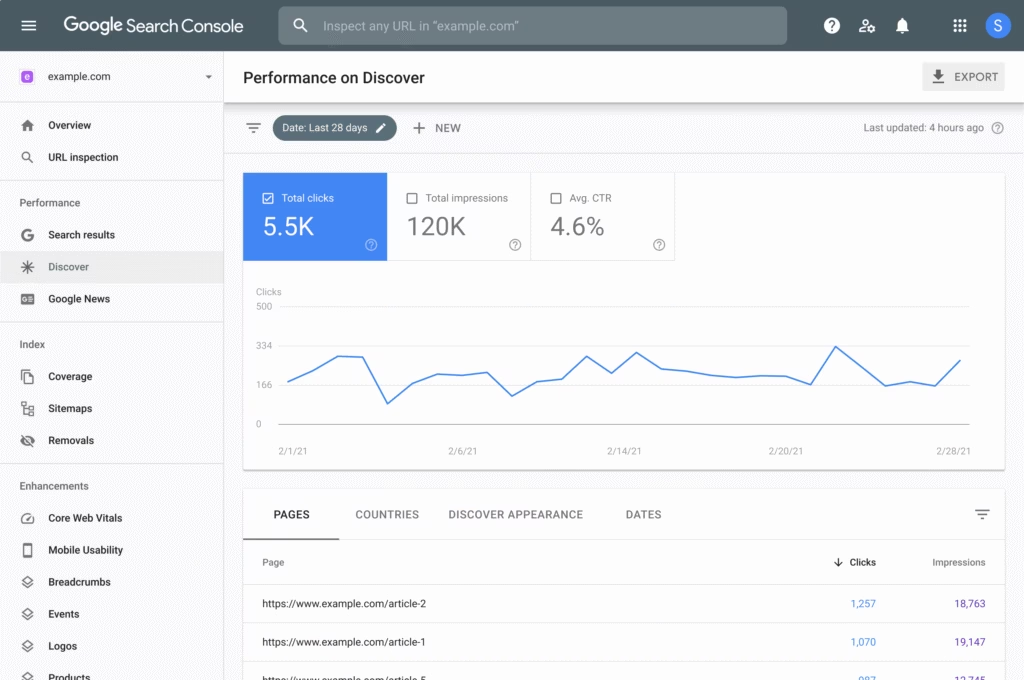
search console performance report

GA4 tracks how people interact with your site, what they view, where they came from, and how long they stay.
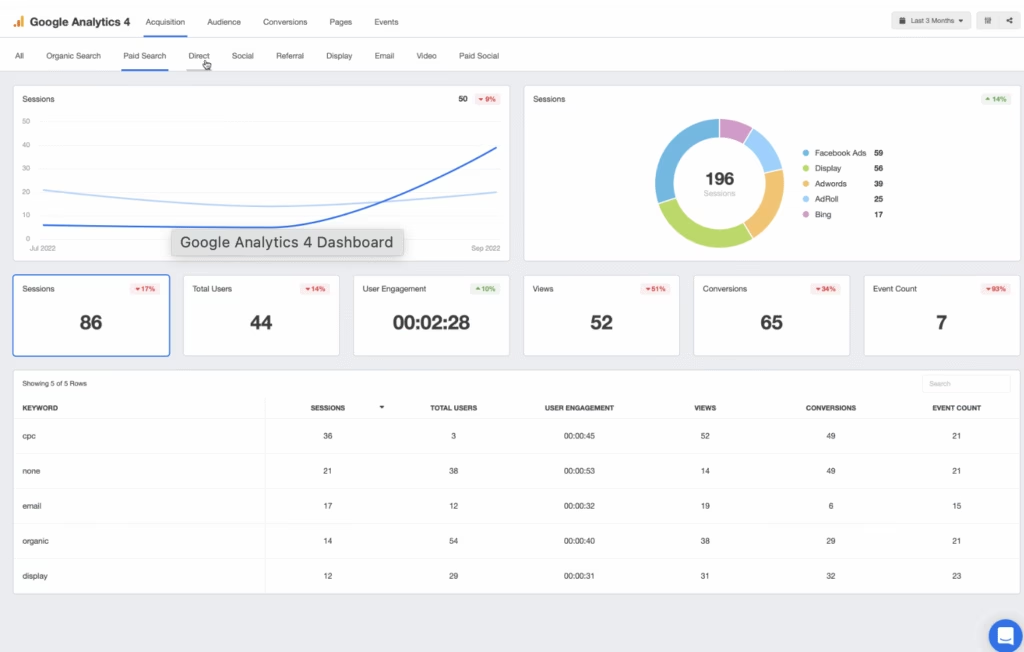
Data and Metrics google analytics

Set up both tools before you start promoting your site. This gives you a clean performance baseline and ensures you can track progress from day one.

3. Perform Foundational Keyword Research

Keyword research is the process of identifying the exact words your customers use to search online. Without this step, you risk publishing content no one is looking for.

Start by brainstorming broad topics related to your product or service, then refine them into long-tail keywords that reflect specific, high-intent searches like “eco-friendly wedding invitations” or “best CRM for real estate agents”. These longer phrases are easier to rank for and attract more qualified visitors.

Use the Search Atlas Keyword Research Tool to uncover keywords with strong search volume, low competition, and relevant commercial intent. 

Navigating to SA keyword research tool

The tool shows essential metrics like CPC, keyword difficulty, and ranking trends, helping you prioritize the best terms for each page.

overview of keyword research tool for SEO analysis

Build your homepage, service pages, and blog content around these findings. This ensures your content aligns with what people are already searching for and improves your chances of ranking early.

4. Plan Your Site’s Structure Before Launch

Site structure refers to how your pages are organized and linked. A clear structure makes it easier for users to navigate and helps search engines understand which pages are most important.

The most effective site architecture is flat and simple: Homepage > Categories > Subpages. Group related content under logical categories, and ensure no page is buried more than 3 clicks from the homepage.

This structure also supports internal linking, which spreads authority across pages and improves crawlability. Planning this before launch prevents messy navigation, broken menus, and poor user experience later.

5. Create Content That Solves Real Problems

Search engines reward content that’s relevant and helpful. For your site to appear in search results, it needs content that answers questions, solves problems, or offers detailed information.

Every main page including your homepage, services, and product pages, should be built around one target keyword. Avoid thin pages (under 300 words) and aim for useful, well-formatted content that’s easy to scan and understand.

Focus on writing helpful content like FAQs, guides, and comparisons. These formats attract backlinks and keep users engaged. Start with your most important topics, then expand as your site grows.

6. Master Basic On-Page SEO Elements

On-page SEO is the practice of optimizing individual page elements for search engines. These signals tell search engines what your content is about. Neglecting them is a common mistake that makes it difficult for a new site to gain traction.

These core elements include:

  • Title Tag: Add your main keyword and keep it under 60 characters.
  • Meta Description: Write a clear summary under 160 characters that encourages clicks.
  • URL Structure: Keep URLs short, readable, and include your keyword.
  • Header Tags (H1–H3): Use headers to break content into sections for both users and search engines.
  • Image Alt Text: Describe each image with relevant keywords for accessibility and ranking.
  • Internal Links: Link to other relevant pages on your site to improve crawlability and user navigation.

Taking time to optimize these small details builds a strong SEO foundation and makes your content easier for both search engines and real users to understand.

7. Ensure Technical Health and Mobile-Friendliness 

Technical SEO ensures your website can be crawled and indexed by search engines without issues. If search engines can’t access your site, your content is invisible. 

Check core areas like page speed, mobile responsiveness, and crawlability. Google uses mobile-first indexing, so your site must load quickly and work smoothly on smartphones. Poor performance or blocked pages can prevent search engines from accessing your content.

Use the Search Atlas Site Auditor to detect technical issues across your site, like broken links, crawl errors, missing sitemaps, or blocked pages.

using the SA site auditor tool for SEO reporting

Once detected, OTTO SEO, the platform’s AI optimization agent, automates key technical fixes like internal linking, image alt texts, canonical tags, organizational schema markup, directly on your site.
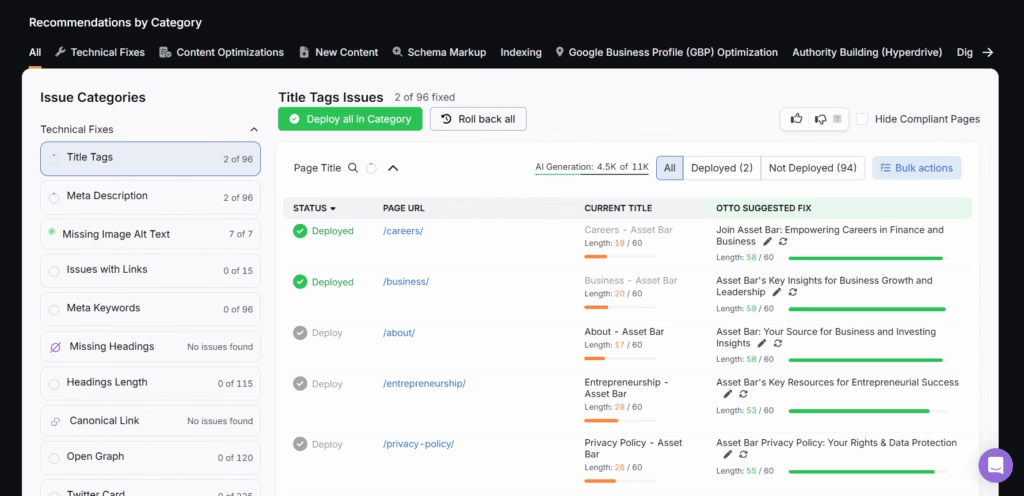
Recommendations by Otto SEO to improve SEO

8. Choose the Right SEO Tool for Scale and Automation

Managing SEO manually can take hours each week, especially if you’re handling multiple clients or stores.

For an automated approach, a suite like Search Atlas is designed for efficiency. It integrates directly with WordPress, Shopify, and custom-built websites, allowing you to manage SEO effectively. 

search atlas shopify

Its AI assistant, OTTO SEO, connects to Google Search Console (GSC) and Google Business Profile (GBP) to deploy real-time optimizations automatically. It doesn’t just suggest fixes, it implements them.

For agencies or multi-store brands, the pricing scales down: the more websites you activate, the less you pay. Starting at $99 per OTTO activation, you can get down to $39 per site as you grow. 

A backlink is a link to your website from another site. Search engines see backlinks as votes of trust, making them a powerful ranking factor. A new site starts with zero backlinks, so a proactive strategy is essential to build authority.

Focus on quality over quantity. A single backlink from a relevant, high-authority website is more valuable than hundreds of low-quality links. The best way to earn them is by creating valuable content that others naturally want to reference and share.

To scale this efficiently, use the Search Atlas WILDFIRE tool, which automates backlink acquisition through a 2:1 exchange network. 
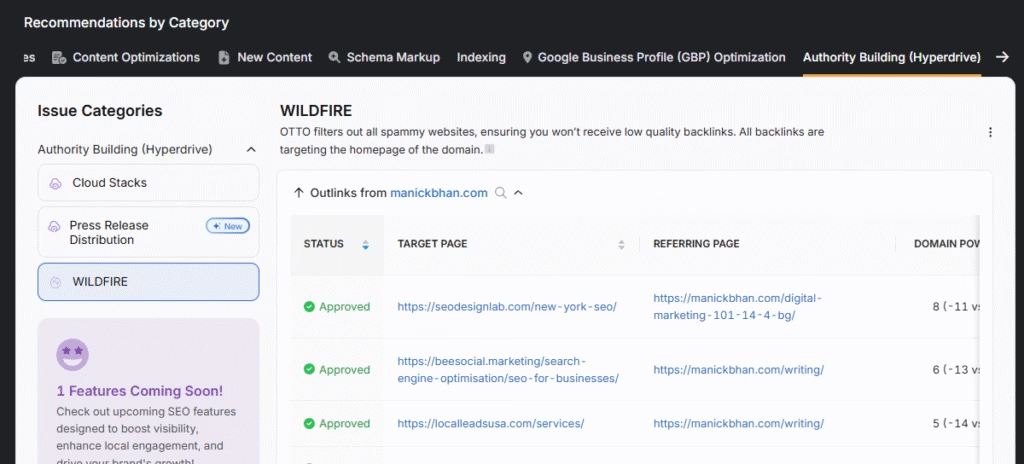
otto wildfire backlink exchange

For every two outbound links placed on your site, you earn one inbound link from a topically relevant website.

Maintain and Grow Your SEO Over Time

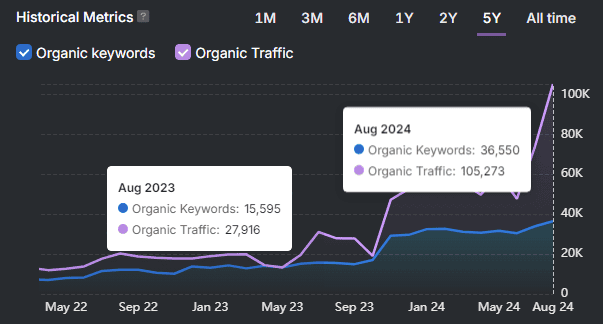
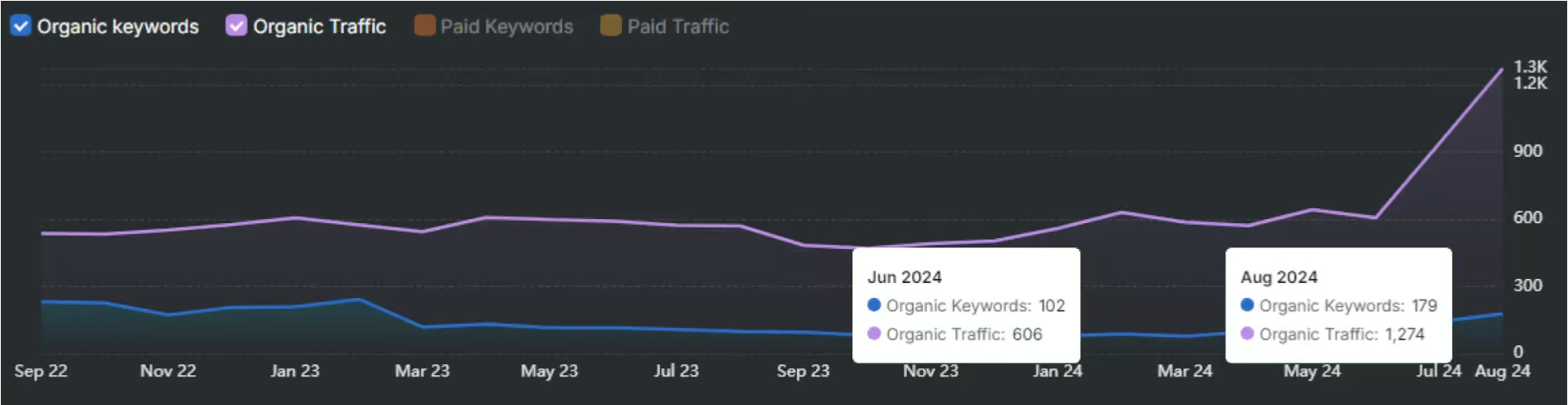
Launching your website is just the start. SEO is a continuous effort that requires regular monitoring and updates to maintain visibility and performance. Use the Search Atlas platform to track keyword rankings, identify content gaps, and monitor site health over time.

As your site grows, revisit your content, resolve technical issues, and refine your approach based on performance data. Staying consistent with improvements over time is what leads to long-term SEO success.
Related Reads to Boost Your SEO Knowledge

Agentic AI: What It Is, How It Works and Why It Matters
AI SEO

Agentic AI: What It Is, How It Works and Why It Matters

Agentic AI is a type of artificial intelligence system designed to autonomously pursue defined goals through perception, reasoning, planning, and action with limited human supervision. The agentic AI definition combines generative artificial intelligence, pred

AI Citation Eligibility Optimization: Definition, Signals, and Strategies
AI SEO

AI Citation Eligibility Optimization: Definition, Signals, and Strategies

AI citation eligibility optimization is the structured process of aligning content, entities, authority signals, and technical foundations so AI systems select, cite, and reference a brand inside AI-generated answers. Citation eligibility in AI search means th

Brand Mentions vs Backlinks: Key Differences, SEO, and AI Visibility Impact
SEO

Brand Mentions vs Backlinks: Key Differences, SEO, and AI Visibility Impact

Brand mentions are textual references to a company without required hyperlinks, while backlinks are clickable hyperlinks that transfer link equity and authority. Brand mentions SEO strengthens entity recognition, contextual trust, and AI inclusion probability.

Brand SERP Protection Checklist: How to Control, Defend, and Optimize Your Brand Search Results
SEO

Brand SERP Protection Checklist: How to Control, Defend, and Optimize Your Brand Search Results

Brand SERP Protection is the system that controls how a brand appears across brand search results and protects visibility, accuracy, and trust in Google Search. Brand SERP Protection defines how search systems evaluate entity signals, content alignment, and ex

Hyperlocal Ranking Factors: What They Are and How They Influence Local Search
Local SEO

Hyperlocal Ranking Factors: What They Are and How They Influence Local Search

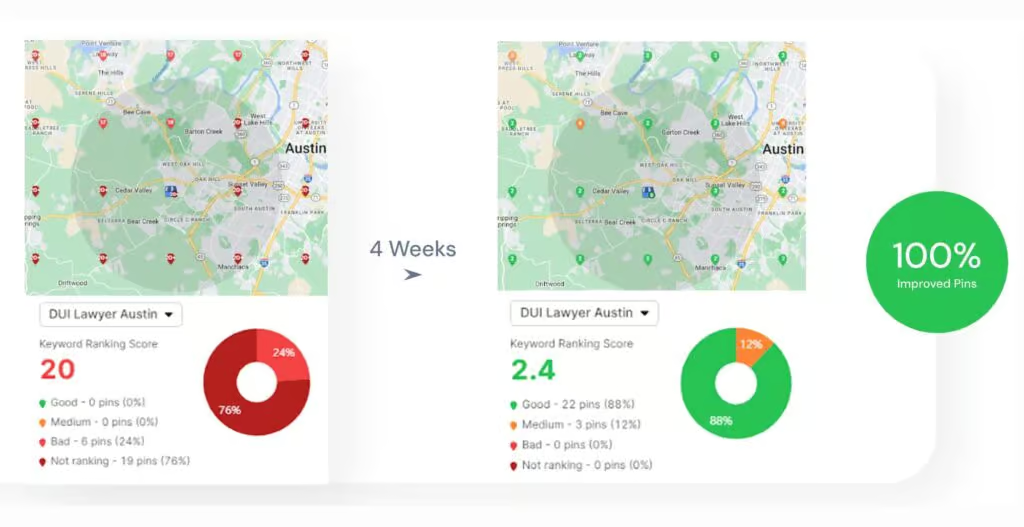
Hyperlocal ranking factors are the signals that determine how businesses appear in location-specific search results within very small geographic areas. Hyperlocal ranking factors define how search systems evaluate proximity, relevance, and real-world activity

AI Citations vs Mentions: Key Differences, SEO Impact, and Optimization Strategies
AI SEO

AI Citations vs Mentions: Key Differences, SEO Impact, and Optimization Strategies

Key differences, SEO impact, and optimization strategies between AI citations and mentions define how citation artificial intelligence and brand mentions in AI function as distinct authority and visibility signals inside generative search systems. AI citations

Agentic AI: What It Is, How It Works and Why It Matters
AI SEO

Agentic AI: What It Is, How It Works and Why It Matters

Agentic AI is a type of artificial intelligence system designed to autonomously pursue defined goals through perception, reasoning, planning, and action with limited human supervision. The agentic AI definition combines generative artificial intelligence, pred

AI Citation Eligibility Optimization: Definition, Signals, and Strategies
AI SEO

AI Citation Eligibility Optimization: Definition, Signals, and Strategies

AI citation eligibility optimization is the structured process of aligning content, entities, authority signals, and technical foundations so AI systems select, cite, and reference a brand inside AI-generated answers. Citation eligibility in AI search means th

Brand Mentions vs Backlinks: Key Differences, SEO, and AI Visibility Impact
SEO

Brand Mentions vs Backlinks: Key Differences, SEO, and AI Visibility Impact

Brand mentions are textual references to a company without required hyperlinks, while backlinks are clickable hyperlinks that transfer link equity and authority. Brand mentions SEO strengthens entity recognition, contextual trust, and AI inclusion probability.

Brand SERP Protection Checklist: How to Control, Defend, and Optimize Your Brand Search Results
SEO

Brand SERP Protection Checklist: How to Control, Defend, and Optimize Your Brand Search Results

Brand SERP Protection is the system that controls how a brand appears across brand search results and protects visibility, accuracy, and trust in Google Search. Brand SERP Protection defines how search systems evaluate entity signals, content alignment, and ex

Hyperlocal Ranking Factors: What They Are and How They Influence Local Search
Local SEO

Hyperlocal Ranking Factors: What They Are and How They Influence Local Search

Hyperlocal ranking factors are the signals that determine how businesses appear in location-specific search results within very small geographic areas. Hyperlocal ranking factors define how search systems evaluate proximity, relevance, and real-world activity

AI Citations vs Mentions: Key Differences, SEO Impact, and Optimization Strategies
AI SEO

AI Citations vs Mentions: Key Differences, SEO Impact, and Optimization Strategies

Key differences, SEO impact, and optimization strategies between AI citations and mentions define how citation artificial intelligence and brand mentions in AI function as distinct authority and visibility signals inside generative search systems. AI citations

Agentic AI: What It Is, How It Works and Why It Matters
AI SEO

Agentic AI: What It Is, How It Works and Why It Matters

Agentic AI is a type of artificial intelligence system designed to autonomously pursue defined goals through perception, reasoning, planning, and action with limited human supervision. The agentic AI definition combines generative artificial intelligence, pred

AI Citation Eligibility Optimization: Definition, Signals, and Strategies
AI SEO

AI Citation Eligibility Optimization: Definition, Signals, and Strategies

AI citation eligibility optimization is the structured process of aligning content, entities, authority signals, and technical foundations so AI systems select, cite, and reference a brand inside AI-generated answers. Citation eligibility in AI search means th

Brand Mentions vs Backlinks: Key Differences, SEO, and AI Visibility Impact
SEO

Brand Mentions vs Backlinks: Key Differences, SEO, and AI Visibility Impact

Brand mentions are textual references to a company without required hyperlinks, while backlinks are clickable hyperlinks that transfer link equity and authority. Brand mentions SEO strengthens entity recognition, contextual trust, and AI inclusion probability.

Brand SERP Protection Checklist: How to Control, Defend, and Optimize Your Brand Search Results
SEO

Brand SERP Protection Checklist: How to Control, Defend, and Optimize Your Brand Search Results

Brand SERP Protection is the system that controls how a brand appears across brand search results and protects visibility, accuracy, and trust in Google Search. Brand SERP Protection defines how search systems evaluate entity signals, content alignment, and ex

Hyperlocal Ranking Factors: What They Are and How They Influence Local Search
Local SEO

Hyperlocal Ranking Factors: What They Are and How They Influence Local Search

Hyperlocal ranking factors are the signals that determine how businesses appear in location-specific search results within very small geographic areas. Hyperlocal ranking factors define how search systems evaluate proximity, relevance, and real-world activity

AI Citations vs Mentions: Key Differences, SEO Impact, and Optimization Strategies
AI SEO

AI Citations vs Mentions: Key Differences, SEO Impact, and Optimization Strategies

Key differences, SEO impact, and optimization strategies between AI citations and mentions define how citation artificial intelligence and brand mentions in AI function as distinct authority and visibility signals inside generative search systems. AI citations

Visualize Your SEO Success: Expert Videos & Strategies

Ready to Replace Your SEO Stack With a Smarter System?

If Any of These Sound Familiar, It's Time for an Enterprise SEO Solution:

  • 25 - 1000+ websites being managed
  • 25 - 1000+ PPC accounts being managed
  • 25 - 1000+ GBP accounts being managed