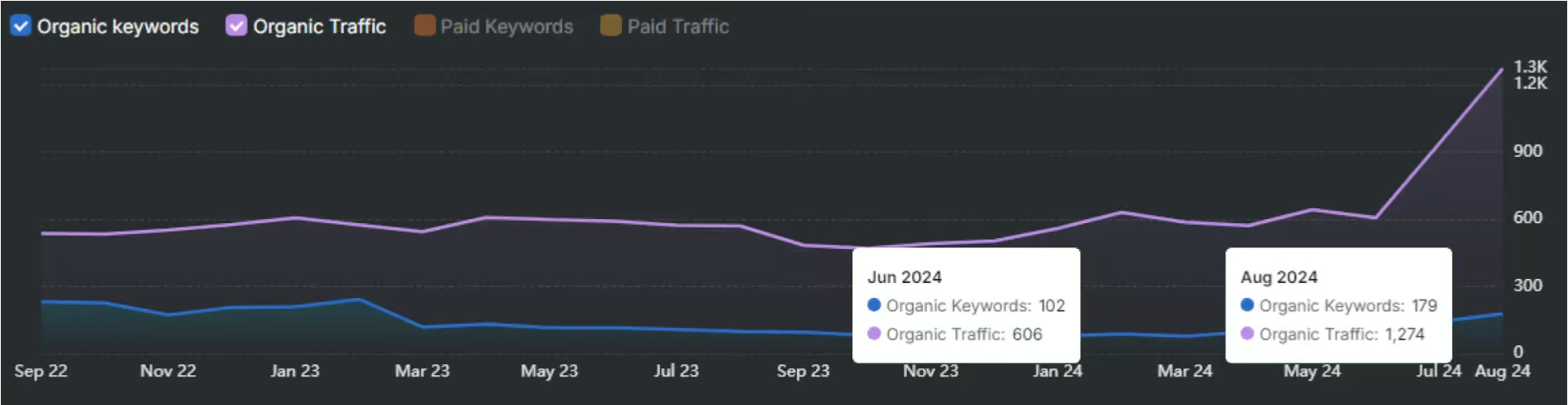
Keywords are the foundation of your SEO strategy because they help your content rank higher in SERPs. 🔍
But let’s be honest: Keyword research can feel overwhelming, right? That’s where a handy keyword research template comes in. They help you stay organized, whether you’re just kicking off a new website, brainstorming fresh content ideas, or trying to get more eyeballs on your existing site.
It doesn’t matter if you’re an SEO wizard, a brand-new blogger, or somewhere in the middle; these templates can help.
We’ll help you navigate what a keyword research template is and how to use it to get real results, and we’ll share four killer strategies that go beyond keyword research for free.
Let’s begin! 👇
What Is a Keyword Research Template?
A keyword research template is a document or spreadsheet that helps you organize and manage keyword data for your SEO campaigns. It allows you to track, prioritize, and evaluate keywords based on search volume, competition, and relevance to your audience.
You can easily spot new opportunities and build a solid SEO strategy with the right template. 💪
For example, early in your career, you can make the mistake of targeting high-volume keywords that had low competition but weren’t relevant to your target audience. It won’t bring the right visitors, so your revenue will flatline. It was just a vanity metric.

What Are the Benefits of Using Keyword Research Templates?
Keyword research has become more complex, and countless tools and techniques are available.
A keyword research template brings all these methods together in one place, letting you work step-by-step without jumping between tabs. When you’re done, you’ll have a clear list of keywords to target and increase blog engagement. 🎯
Some benefits of Keyword Research templates are:
- Streamlines the process: Ensures consistency across campaigns and makes comparing data easier.
- Saves time: Keeps everything organized in one place, so you don’t have to switch tools constantly.
- Measure and compare: Track rankings, competition, and key metrics to focus your SEO efforts.
- Flexible views: Display data in tables or charts to easily assess keyword performance.
- Integrations: Import data directly from keyword tools to keep all research in one spot.
- Facilitates collaboration: Easy to share findings with your team or clients.
- Customizable: Tailor the template to fit your specific SEO needs.
4 FREE Keyword Research Templates for SEO
We’re offering 4 free keyword research templates to simplify your SEO process:
- ManyRequests Template: Streamline your keyword research with a guide and customizable, easy-to-use template.
- SEO Frank Template: Simplify keyword tracking by organizing data from various tools in one place.
- LeadPost Template: Organize your keywords in multiple columns to refine your content strategy.
- QuestionDB Template: Prioritize and track high-impact keywords to eliminate guesswork.
Next, how to use them effectively and we’ll share strategies that go beyond templates to elevate your keyword research even further.
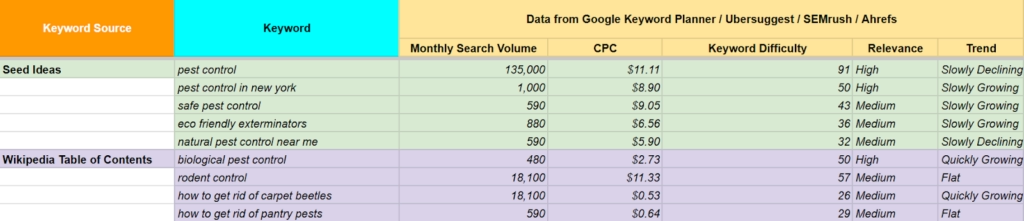
How to Use Keyword Research Templates?
Here’s how to effectively use your Keyword Research Template in fewer steps:
- Brainstorm seed ideas: Start by brainstorming “seed” ideas, specific phrases (like “best link building tools”) or broader topics (like “link building”) using a blog idea generator.
- Expand your list: Use keyword sources (Like Google Keyword Planner or Search Atlas) to find related keywords and add them to the template.
- Prioritize keywords: Fill in the metrics section, like search volume, competition, and CPC. Prioritize based on search volume, relevance, and competition, so you focus on terms that will bring the most value.
- Plan content: Once prioritized, map your keywords to content ideas for the next 3 months.
How to Select the Right Keywords?
Not all keywords are worth targeting.
High search volume means more traffic potential, but also more competition, while low-volume keywords (under 90 searches/month) may not be worth the effort.
The best strategy is to balance medium-to-high-volume keywords with manageable competition. 🧠
Here’s how to identify them:
- Search Volume: Higher volume brings more traffic and more competition. Target keywords with a strong balance of search volume and ranking potential.
- Keyword Difficulty (KD): Measures how hard it is to rank. Low-KD keywords are easier to win, while high-KD keywords require stronger authority.
- Related and LSI Keywords: Variations that help search engines understand context (e.g., “best hiking backpacks” to “lightweight travel backpacks”).
Next, your content must match keyword intent, meaning it should align with what users are searching for:
- High Intent: Purchase-driven (e.g., “buy waterproof backpack”).
- Medium Intent: Research-focused (e.g., “best backpacks for hiking”).
- Low Intent: Informational (e.g., “how to clean a backpack”).
Once you’ve analyzed your keywords, refine your list by sorting them by value:
- Primary opportunities are high-value targets with strong traffic potential.
- Secondary opportunities are long-tail variations that support your main keywords.
- Tertiary opportunities are niche terms suited for blog posts or supporting content.
Why Are Templates Not Good Enough?
Keyword research templates are outdated. 🧓
While they help you organize data, they’re too limited for a full SEO strategy, even for beginners.
They focus on basic metrics like search volume and competition, but miss essential factors like user intent, trends, content topics, topical maps, how keywords interact, and more.
Instead of relying on templates, we’ll show you smarter, more powerful strategies that provide better results.
Plus, we’ll give you access to a free trial tool.
4 Ways to Do Keyword Research Reports More Effectively than Templates
We’re diving into four straightforward but super effective ways to find the best keywords and use them to create content that hits the mark.
These tips are simple to follow and will help you craft content that genuinely connects with your audience. Ready to get started?
1. Use Keyword Research Tools
Keyword research tools are essential for finding the best keywords to boost your SEO. They provide insights into search volume, competition, user intent, and trending keywords, while also offering related keywords, long-tail phrases, and FAQs to enhance your content.
Search Atlas is packed with awesome tools to make keyword research easier and more effective:
- Keyword Research: Dive into search volume, competition, and emerging trends to find high-impact keywords.

- Keyword Magic Tool: Get a wide range of keyword suggestions, sorted by intent, for precise targeting.
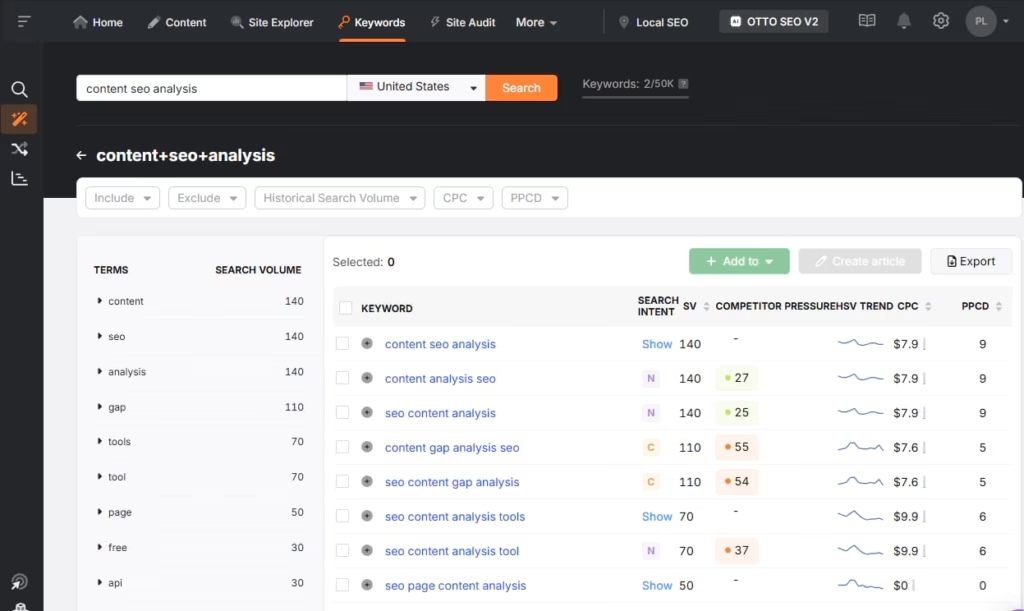
All your findings can be easily exported to sheets, creating ready-to-use templates for efficient keyword management.
2. Leverage Content Planner to Organize Strategy
A content planner aggregates related keywords for a specific topic into a clear, organized dashboard. It’s done using a content planner tool.
It groups keywords into clusters based on relevance and search intent, showing key metrics like search volume and competition.
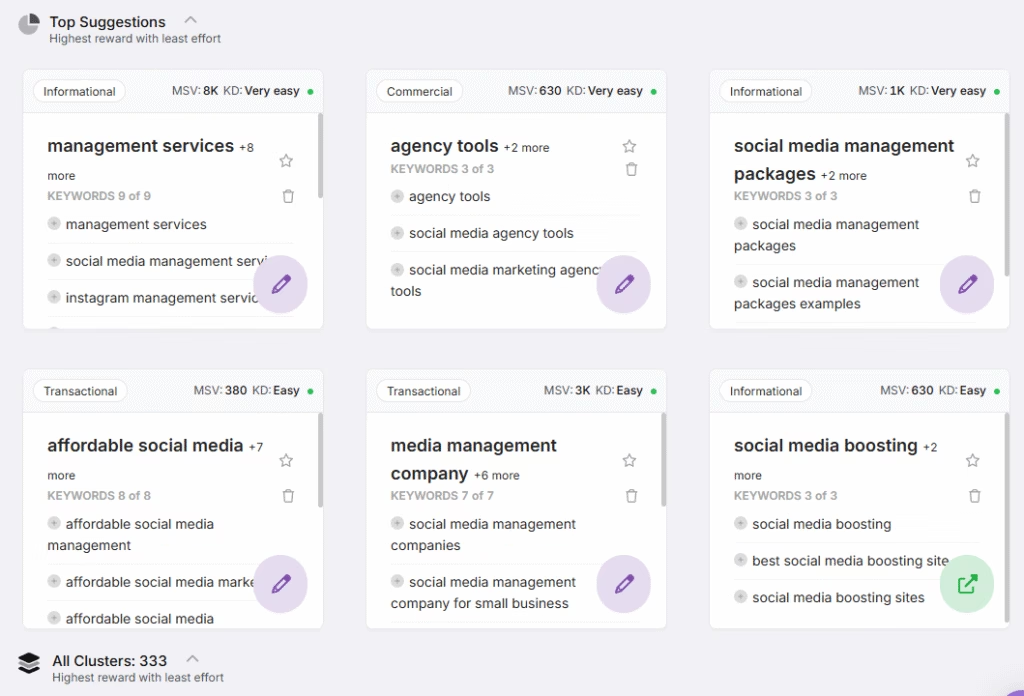
Start by entering your website’s primary topic and home page URL along with your target audience’s location. Click “Generate Keyword Clusters” to begin creating your SEO content plan.

The tool lets you select a content cluster and click “Create Article” to create SEO-optimized content. It automatically places the right keywords and ensures your content is well-structured.
3. Create Topical Maps to Build Authority
A topical map is a detailed content strategy that organizes topics, subtopics, and related queries into a cohesive framework that aligns with user intent.
It goes beyond just keyword research and content clusters by creating a fully connected roadmap for your content.
To create a topical map, start by identifying your core topic. For instance, if you’re in the outdoor gear niche, the map could include main categories like Tents and Shelter, Sleeping Bags, and Backpacking Stoves, with supporting article ideas connected to each one.
Instead of manually building a topical map, you can use a Topical Maps generator, which automates the process.
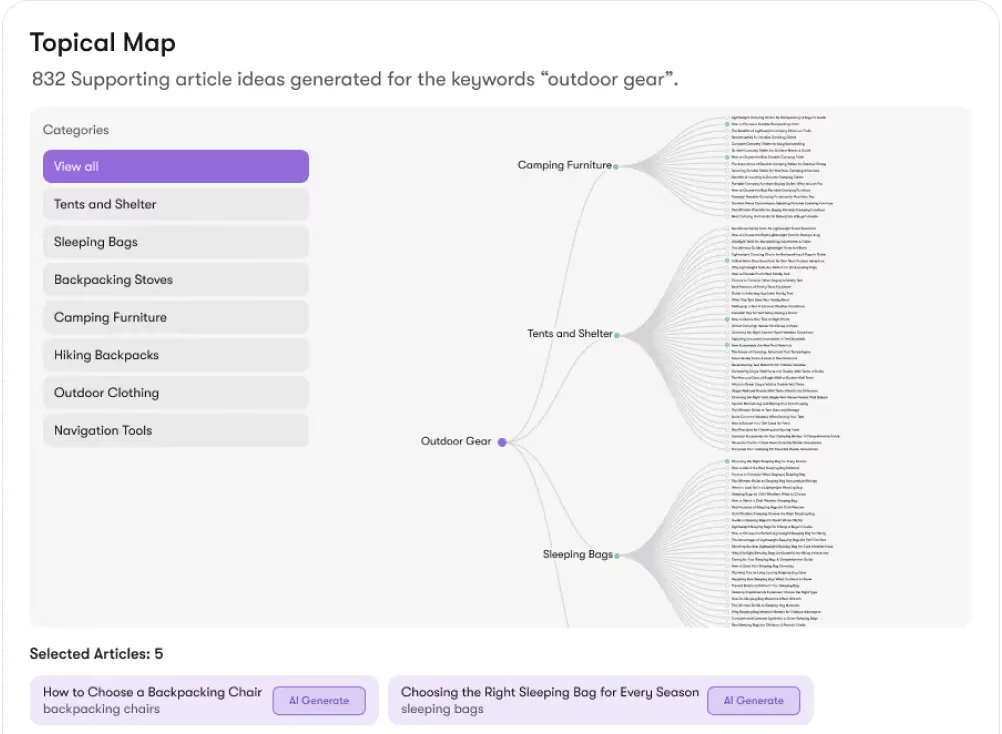
The tool researches, identifies keywords and user intent, creates main and subpages, handles internal linking, and even generates images for a complete strategy.
4. Make Competitor Research to Identify Keyword Gaps
Competitor research analyzes rivals’ SEO strategies to uncover keywords, top pages, backlinks, and content tactics.
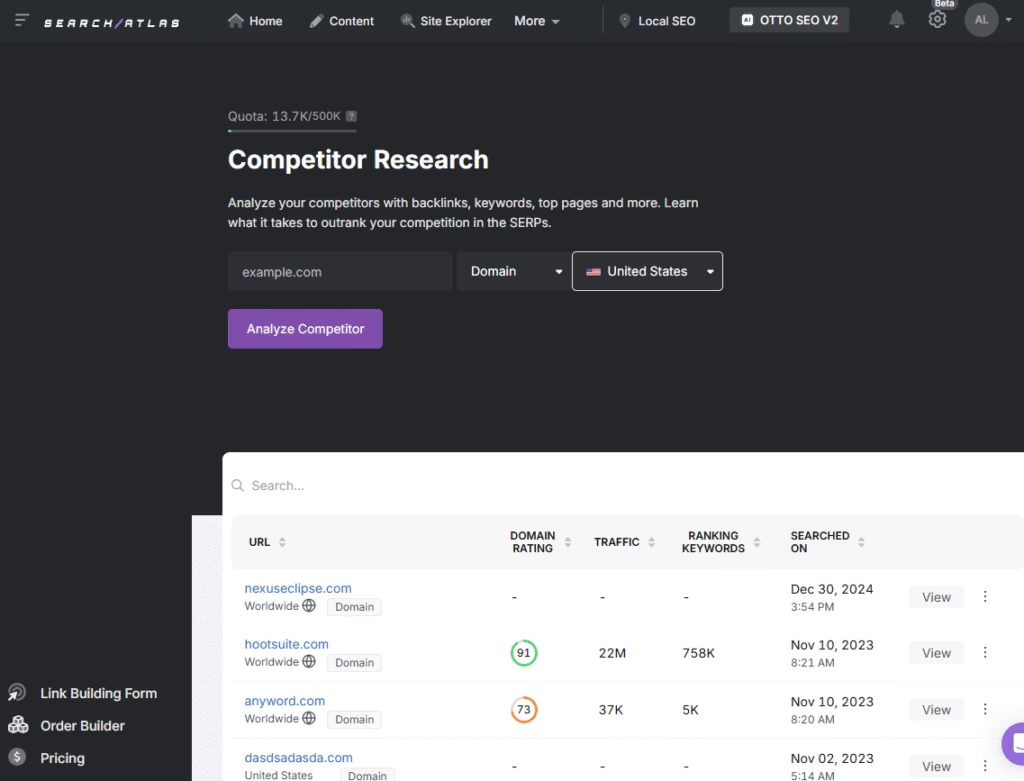
A keyword gap is when competitors rank for keywords you don’t, revealing missed opportunities. Targeting these gaps helps you attract more traffic and close ranking disparities.
Keyword gaps are opportunities where competitors rank for keywords you don’t, offering a chance to attract more traffic.
Use a competitor analysis tool that offers a Keyword Gap Tool to uncover these opportunities. Here’s how:
- Enter your domain and the domains of key competitors into the tool.
- Run the analysis to see a list of keywords that your competitors rank for but you don’t.

Refine your results with filters to focus on the most valuable keywords:
- Position: Prioritize keywords where competitors rank in the top 10 for maximum relevance.
- Search Volume: Target high-volume keywords to drive more traffic.
- Keyword Difficulty (KD): Look for “Very Easy” to “Easy” keywords for quick wins.
- Intent: Choose transactional keywords for conversions or informational ones for blog content.
- Advanced Filters: Further narrow results by including terms specific to your niche.
Save high-potential keywords to a list and develop a strategy to target them with optimized content, internal linking, and backlinks.
How To Automate Keyword Research, Planning, and Writing
SEO doesn’t have to be a grind. 😌
With the right tools, you can automate almost everything without wasted time or heavy lifting. And guess what? These tools are affordable, and you can try them for free.
Search Atlas handles keyword research, content planning, topical mapping, and even AI-powered writing in just a few clicks. No more spreadsheets, no more guesswork.
But the real game-changer? OTTO, the first AI SEO agent. 🦾
It automates nearly everything: Keyword strategy, content optimization, and even technical fixes.
Learn how below.
Keyword Research and Content Creation to Boost Your SEO Strategies
OTTO is your personal AI SEO agent, built to take the heavy lifting out of SEO. It finds the best keywords, integrates NLP terms, and uncovers topical opportunities.
But OTTO doesn’t stop there.
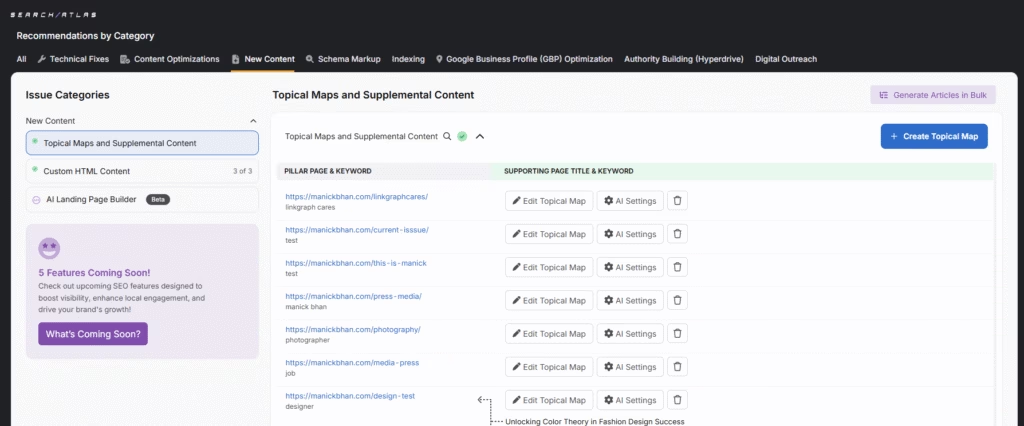
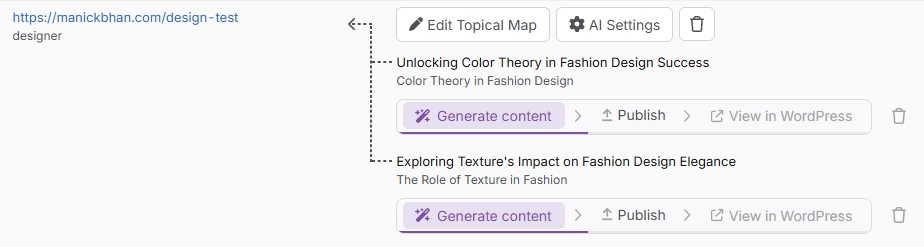
It automatically builds a topical map based on your business and strategy, ensuring your content aligns with the right themes.
Then, it generates and publishes optimized content for you, turning your SEO workflow into a hands-free process.
Review Content to Enhance Relevance and Accuracy
OTTO automatically scans your content to identify missing keywords and semantic gaps, then updates it in real-time, ensuring your content stays relevant and factually accurate.
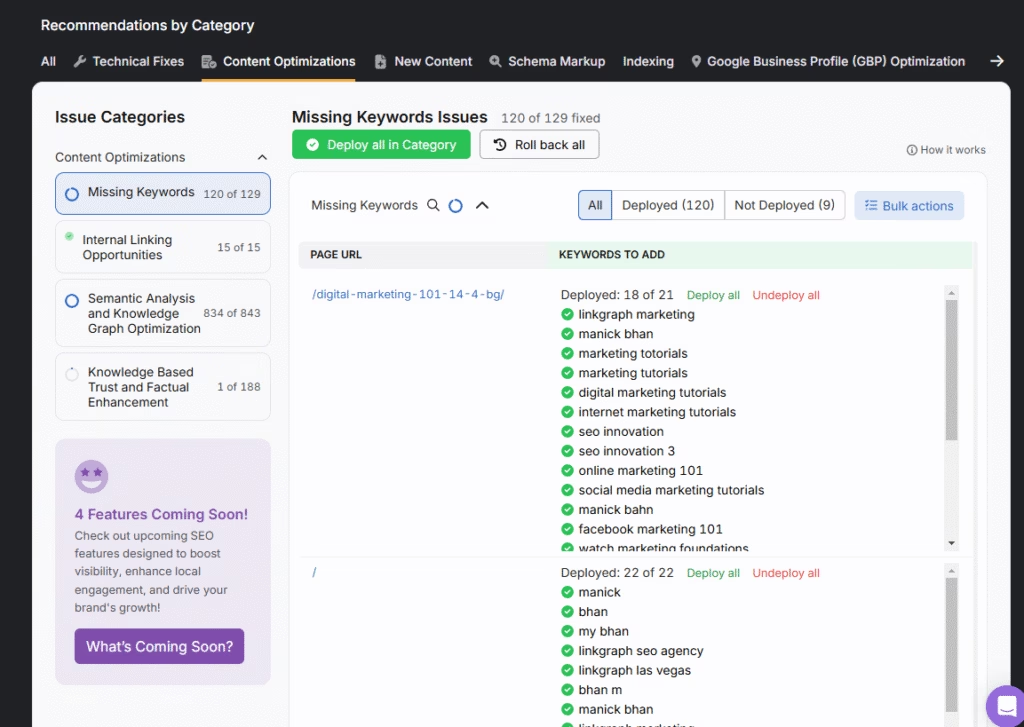
It doesn’t just optimize once; the AI agent keeps monitoring trends and opportunities. By analyzing top-ranking pages in the SERPs, it finds emerging keywords and integrates them into your content, giving you a competitive edge over time.
Other SEO Tasks to Improve Site Performance
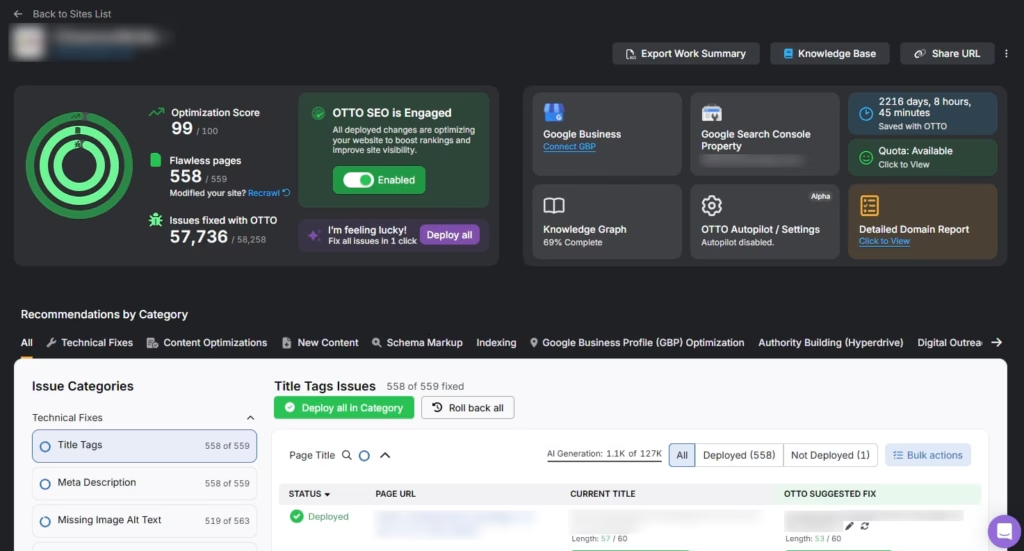
Meet OTTO, the first AI SEO agent that automates almost every part of SEO: keyword research, technical SEO tools, on-page optimization, content creation, link building, local SEO, press releases, and more.
Unlike other AI tools that just suggest changes, OTTO actually implements them.
Why You Don’t Need to Stress Over Keyword Research Templates Anymore
Let’s be honest, keyword research can be a massive pain.
Finding the right keywords, plugging them into spreadsheets, analyzing everything, checking stats … it’s a never-ending cycle!
The secret? 🤫
Smart businesses and SEO pros use AI tools to do the grunt work. That means less time staring at spreadsheets and more time, you know, actually growing.
OTTO handles the tedious, repetitive tasks so you can focus on the good stuff: learning, crafting killer strategies, connecting with your clients, and ensuring your existing content is top-notch.
Tired of the old-school way? Give Search Atlas and OTTO a try with our free trial. No pressure, no hidden fees, cancel anytime!