Keyword difficulty is an SEO metric that estimates how hard it is to get your website onto the first page of Google for a particular keyword. Keyword difficulty is also known as keyword competition or SEO difficulty.
It is possible for a keyword to seem ideal, but if the competition is too fierce, your chances of landing on page #1 shrink fast.
The trick is to find keywords you are able to rank for with solid potential.
So here’s a full guide on how to measure keyword difficulty, how to approach keyword research, what factors matter, and how to use this metric to boost your rankings.

What Is Keyword Difficulty (KD)?
Keyword Difficulty is an SEO metric that estimates how hard it is to get your website onto the first page of Google for a particular keyword.
Google doesn’t provide keyword difficulty scores directly. Instead, SEO tools like Ahrefs, Search Atlas, and Semrush calculate them using their own algorithms. Most SEO tools use a 0-100 scale. Higher keyword difficulty scores mean tougher competition.
A high KD score means you’re up against well-established websites with a strong backlink profile. A lower score suggests it is easier to climb the rankings.
However, many SEO professionals view keyword difficulty as a general concept rather than a fixed metric tied to a specific tool.
In this broader sense, ranking difficulty takes multiple factors into account (domain power, content relevance, search intent).
What Factors Affect Keyword Difficulty in SEO?
Keyword Difficulty measures how competitive a search term appears in organic results. Multiple factors affect the keyword difficulty level. The factors are listed below.
- Backlinks to Top-Ranking Pages. Backlink profiles determine how much authority search engines assign to a page. High numbers of quality referring domains increase trust. Follow links strengthen this effect.
- Authority Scores of Top-Ranking Sites. Top results with high authority raise keyword difficulty.
- Keyword Search Volume. Search volume signals demand. Higher monthly searches attract more competition from publishers and businesses. Increased volume raises keyword difficulty.
- Presence of SERP Features. SERP features reduce organic visibility. Elements like featured snippets and People Also Ask boxes push standard listings down. Greater interference from features increases difficulty.
- Brand Name Keywords. Brand terms favor official websites. Search engines give preference to pages that match the brand. Competing for these terms without representation raises difficulty.
- Search Term’s Word Count. Keyword length affects specificity. Longer phrases match narrower intent and receive fewer searches. Long-tail keywords reduce difficulty and reflect clearer user goals.
Why Does Keyword Difficulty Matter in SEO?
Keyword difficulty is important for planning content, managing resources, and improving your competitive strategy. We explain why it matters and how it affects your SEO success below.
Understanding Your Competition
Keyword difficulty and competitor keyword research work together to help you assess how tough it is to rank for specific keywords.
The websites on the first page determine the competition level. High-authority websites in the first SERP require stronger backlinks and more in-depth content to compete. Lower-authority sites on the first SERP do not require such a strong backlink profile and content. Lower-authority websites ranking in the first SERP present an opportunity to break in with well-optimized content.
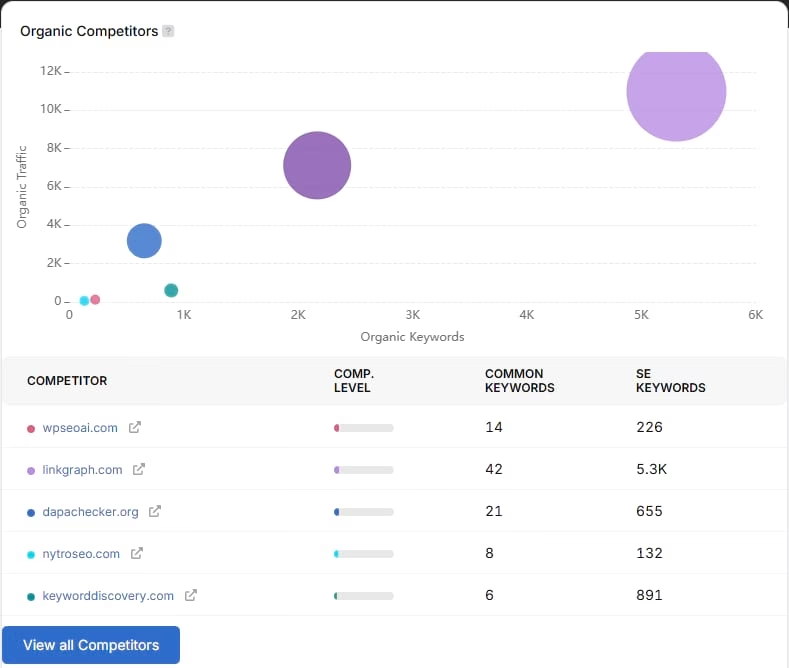
Search Atlas gives you several ways to understand how easy it is to rank, beyond just the KD score. For example, the Keyword Gap Tool lets you compare up to five competitors and see exactly which keywords they rank for, where they’re getting traffic, and what kind of content is helping them succeed. The Keyword Gap Tool lets you reverse-engineer their keyword strategy and find gaps you can take advantage of.
The Keyword Gap Tool gives you the insights listed below.
- Keyword Gap. Keywords your competitors rank for, but you don’t. These are great targets for new content.
- Keywords in Common. Keywords all of you are ranking for. Useful for seeing how well you stack up.
- Keyword Opportunities. Keywords that at least one competitor ranks for, but you don’t. Perfect for expanding your reach.
- Unique Keywords. Keywords only you rank for. Helps you see your strengths and where you’re standing out.
- All Keywords. Keywords any of the sites rank for. Great for deeper analysis.
Setting Your Priorities
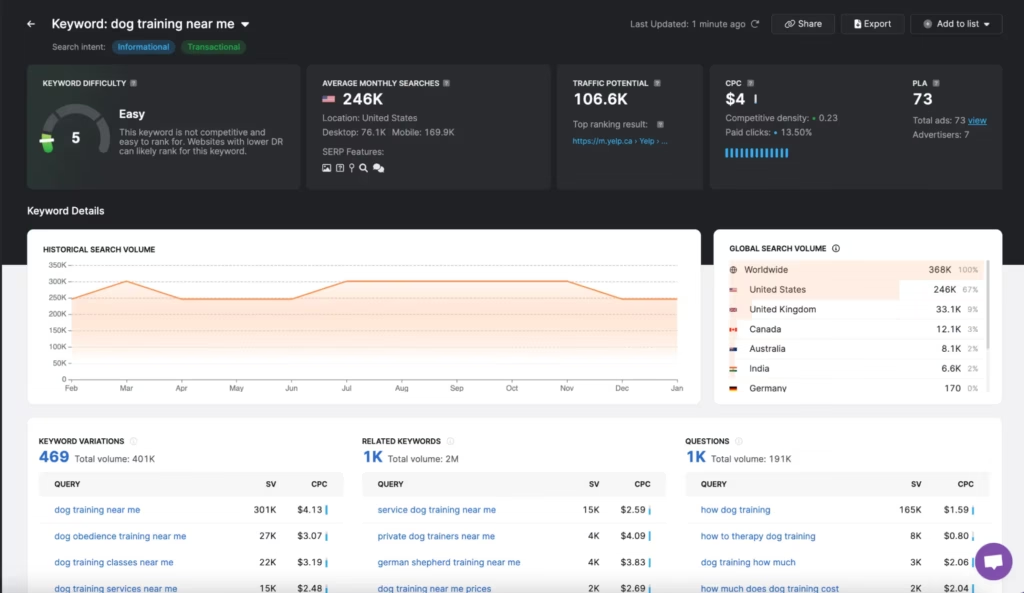
Keyword difficulty helps you set priorities. Some work is quick and easy, some takes moderate effort, and some requires a serious time investment. The same applies to keyword difficulty.
The ways keyword difficulty affects workflow are explained below.
- Easy keywords. Low competition, which makes them easier to rank for. You tackle these in short bursts, like squeezing in a blog post between meetings.
- Medium-difficulty keywords. Medium competition, which requires solid content and SEO. These need dedicated time in your schedule.
- High-difficulty keywords. Heavily contested by strong sites. Ranking takes serious effort (long-form content, long-term approach, building site authority).
Creating a Content Strategy
Competitor keyword rankings reveal gaps and easier opportunities. High-difficulty keywords often require strong backlinks and authority. Lower keyword difficulty scores usually point to quicker entry points.
A high-difficulty keyword with a weak-ranking site shows that content quality or intent alignment influences rankings more than backlinks alone.
Balanced keyword selection supports long-term growth. A mix of easy, moderate, and competitive terms builds authority and drives consistent traffic.
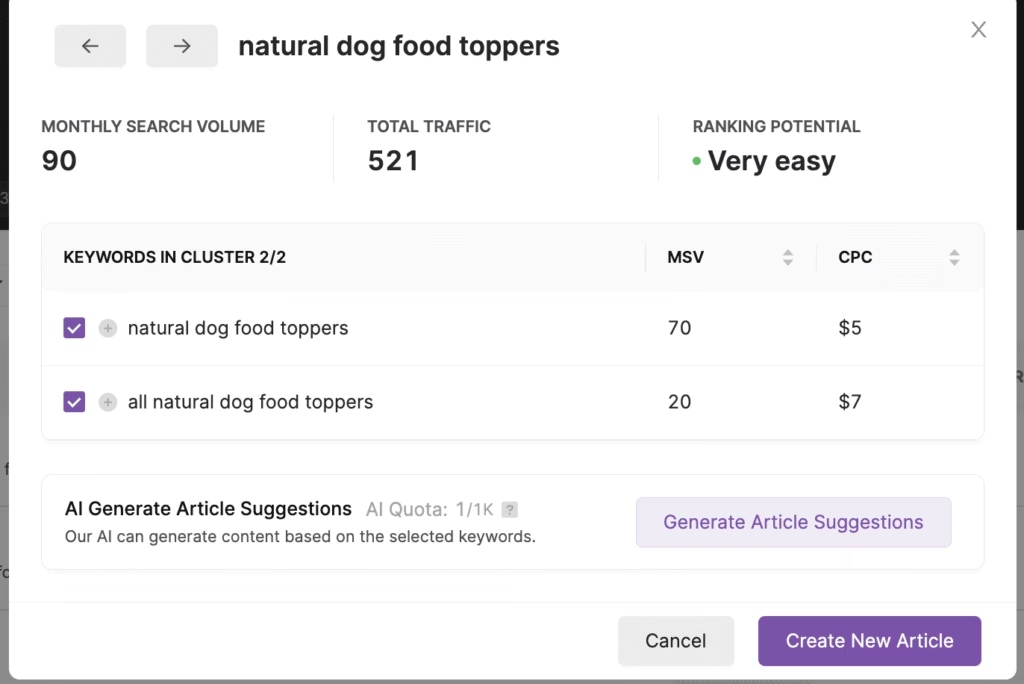
You do this immediately with the Content Planner. Enter a seed keyword and you get a content plan in minutes, along with keywords for a given topic and the KD of the entire keyword cluster.
Optimizing Link-Building Strategies
High-difficulty keywords need strong backlinks. To target highly competitive keywords, improve your backlink profile by focusing on outreach, guest posting, and internal linking. This ensures your SEO efforts are well-targeted and supported by the necessary ranking factors.
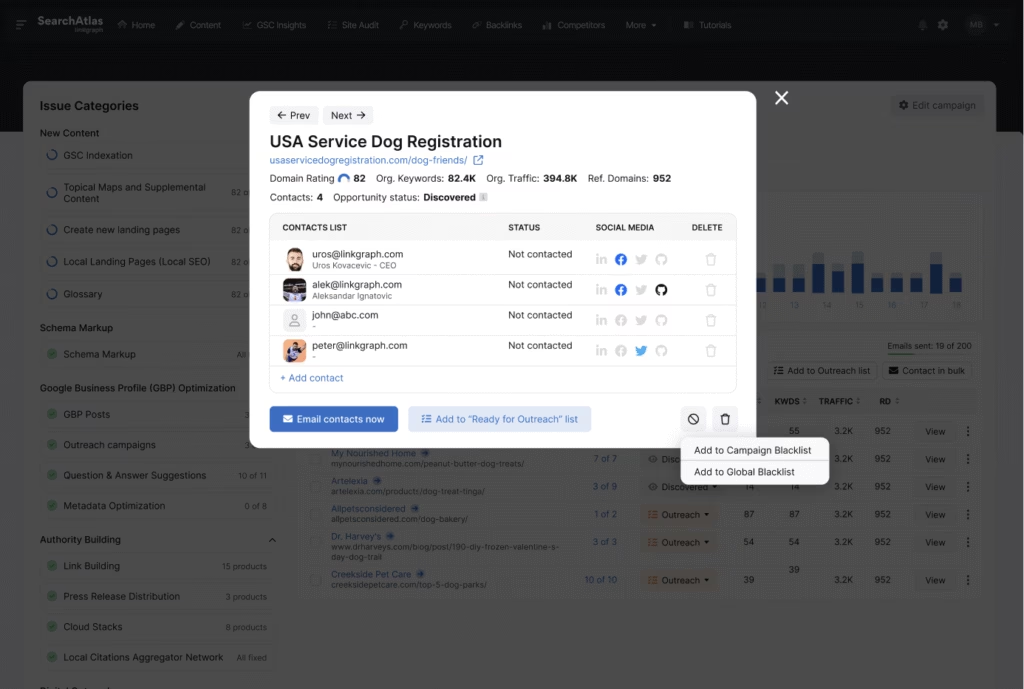
Search Atlas off-page tools help you improve your backlink profile for high-competition keywords. Our outreach tools automate link building, give you access to the largest link exchange in the world, and automate cloud stacking, press release syndication, and other strategies.
Saving Time and Resources
Sometimes, the keyword difficulty score doesn’t match what you expect. That’s your cue to take a second look. Keyword difficulty is a reality check for your strategy.
Imagine you’re planning to write about “best home workout routines.” You assume it’ll be competitive, but the difficulty score is surprisingly low. That seems like an easy win, but ask yourself why.
Maybe people searching for this term don’t actually click on articles but go straight to YouTube videos instead, or there is another issue.
6 Questions to Ask When Assessing Keyword Difficulty
Keyword difficulty is about understanding what it takes to outrank competitors and whether your site is in a position to compete. We explain what really influences keyword difficulty and how to use it to make smarter SEO decisions.
1. Who Are You Competing Against?
SEO is about outranking other websites, so the best way to gauge difficulty is by analyzing the competition. Focus on the questions below.
- Content Quality. Is their content detailed, well-written, and engaging?
- On-page Optimization. Are they using SEO best practices like keyword placement, internal linking, and structured data?
- Backlinks. Strong backlink profiles signal authority. It takes serious effort to outrank pages with tons of high-quality links.
2. How Strong Is Your Website?
Your site authority matters even if a keyword looks easy.
- A new website with no backlinks struggles to rank even for low-competition keywords.
- An established website with solid authority can target harder keywords and still compete.
Metrics like Domain Authority (Moz), Domain Rating (Ahrefs), and (Trust Flow (Majestic) offer a rough idea of your site’s strength. These metrics measure different factors so there is a significant difference between them. For example, the number of factors is vastly different with Domain Rating vs. Domain Authority.
However, they’re just guidelines as Google doesn’t use them directly. Search Atlas has a metric that gives you a much clearer idea of what you need to rank. It’s called Domain Power. Domain Power analyzes organic traffic and keyword rankings, unlike traditional, backlink-based metrics. Domain Power is an authority metric based on what Google actually sees. Domain Power reflects real SERP positions much more accurately.

3. What Is the Best Length?
Short, broad keywords (“running shoes”) tend to be extremely competitive. Long-tail keywords (“best running shoes for beginners”) are usually easier to rank for and attract more targeted traffic.
Since long-tail keywords are more specific, they often have the two characteristics listed below.
- Lower Competition. Fewer big sites compete for them.
- Higher Conversion Rates. Searchers already know what they want.
Long-tail keywords are a smarter alternative if you’re struggling to rank for high-difficulty keywords.
4. Can SERP Features Make It Harder to Rank?
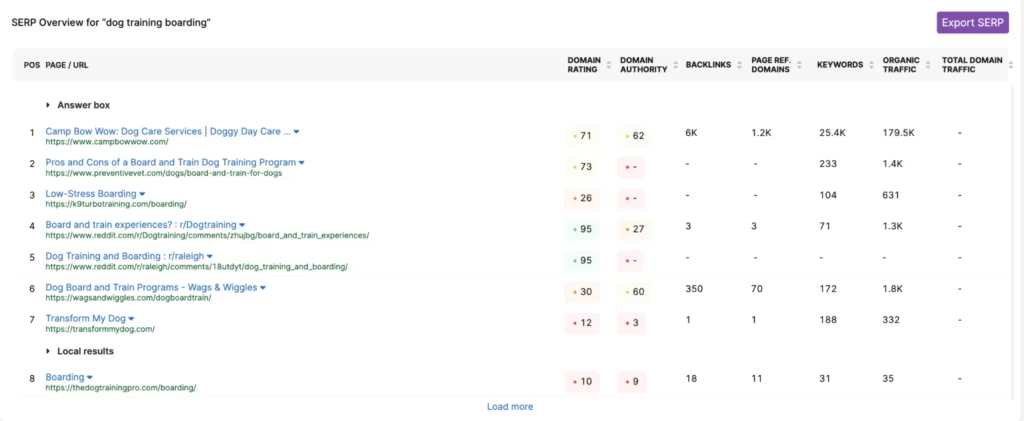
The search results page layout can make ranking harder regardless of difficulty score.
- Featured snippets steal clicks from organic results.
- Ads push organic listings further down.
- Other rich results (like “People Also Ask” or local packs) often reduce visibility.
Check what the SERP looks like before targeting a keyword. Even a low-difficulty keyword might not be worth chasing if the top of the page is crowded with non-organic results.
5. Is Your Content Good Enough?
Ranking depends on how good your content is compared to what’s already ranking. Before targeting a keyword, ask yourself the questions below.
- Can I create content that’s more useful or more in-depth?
- Do I have a unique angle, better research, or original insights?
- Can I add visuals, data, or expert opinions to make my content stand out?
People struggle to outrank current top-ranking pages if the top-ranking pages offer something better in terms of content. This is true no matter how low the keyword difficulty score is.
The good news is that it is possible to analyze content the way Google sees it with Search Atlas Scholar. Scholar looks at your content quality and compares it to the competition. It gives you an assessment for the factors listed below.
- Content Clarity. Measures how well the page communicates its message. That includes sentence structure, reading level, and logical flow.
- Factuality. Measures how accurately the content aligns with its topic.
- Human Effort. Evaluates the level of human touch, originality, and care invested in the content.
- Information Gain. Identifies how much unique insight the page offers compared to pages that are already in the SERPs.
- Content Freshness. Reviews timestamps, references, and publication signals to detect whether the content reflects current information.
- User Intent Alignment. Analyzes how well the page satisfies the search intent.
- Entities. Checks for relevant concepts connected to the topic using Google’s Knowledge Graph.
- Contextual Flow. Ensures the content follows a logical structure from top to bottom.
- Numerical Score. Reviews the presence, accuracy, and clarity of numerical data.
- Query Relevance. Assesses how well the target keyword and page URL align with the page title and headings.
- Readability. Measures the readability level and complexity of your content.

6. Does Your Content Match Search Intent?
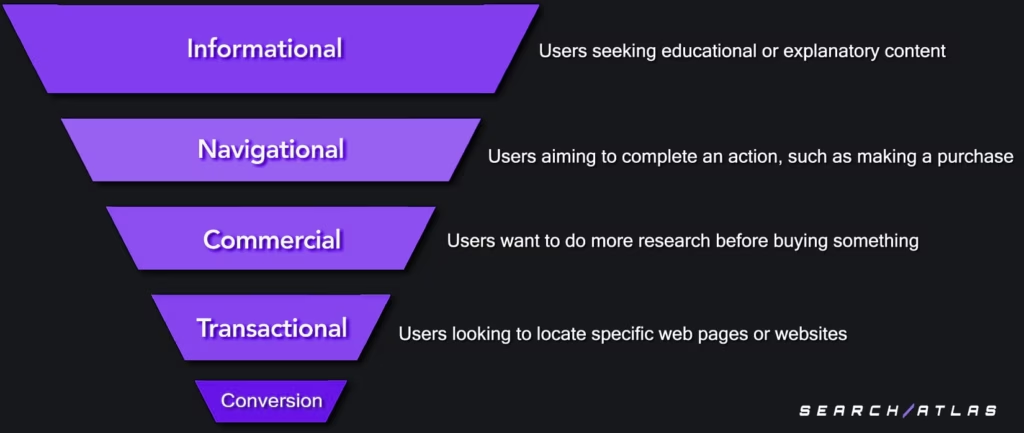
Google doesn’t rank content just because it’s well-written. It ranks content that matches what searchers actually want.
How Do You Check Keyword Difficulty in Search Atlas?
Keyword difficulty isn’t a one-size-fits-all metric. At Search Atlas, we analyze it from two different angles. The two angles are listed below.
- Traditional Keyword Research Tools. Our Keyword Research tools look at Domain Rating (DR) from backlink profiles to estimate competition, using a classic approach.
- OTTO AI Assistant. OTTO SEO looks at the top 20 best-ranking pages instead of just high-DR sites, factoring in real organic traffic and keyword rankings.
Why is this important? While domain rating tells you how authoritative the ranking websites are, OTTO’s method reveals what’s actually succeeding in search results right now.
Focusing on the top-performing pages and going beyond backlinks gives you a much better understanding of what you need to do to be competitive.
This approach has brought our clients the upper hand when it comes to keyword strategy.
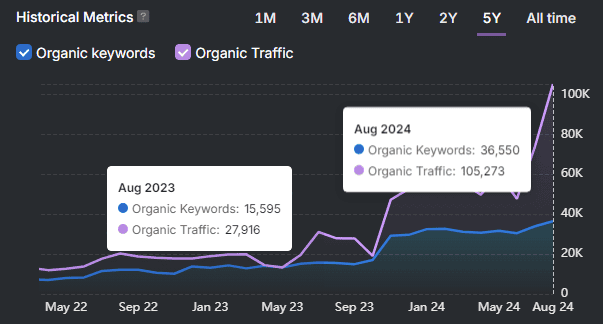
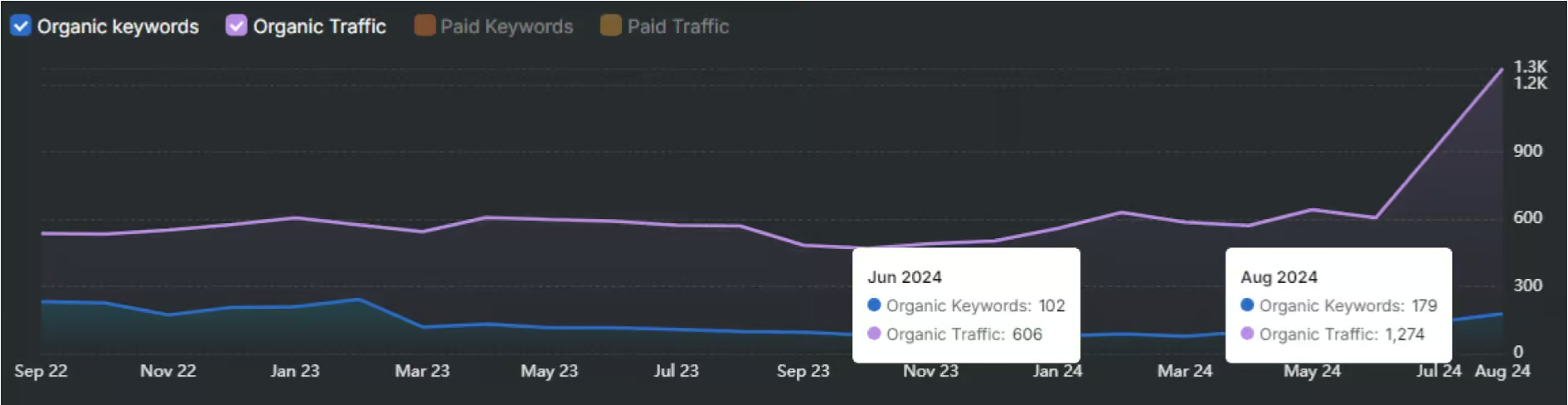
For example, an anti-aging and science website started using Search Atlas. It experienced a growth of 1,149% in Organic Keywords and another 183% rise in the number of Keywords Ranking Top 3 within 9 months.
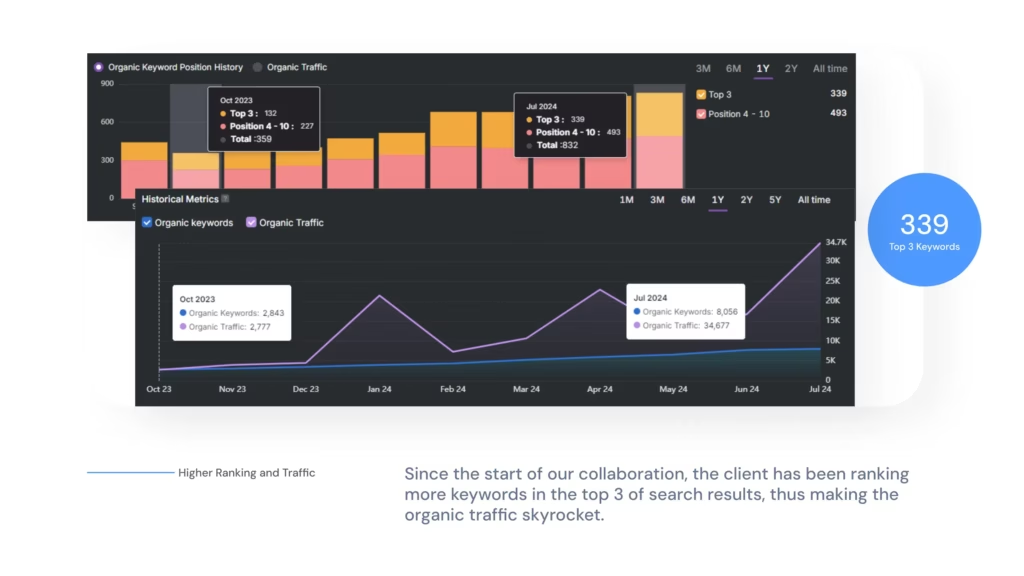
Plus, our Domain Power metric gives you a realistic view of your competitive strength. It helps clients prioritize better, build a smarter content plan, and make the most of their resources. This is crucial for agencies that want to deliver real results.
Keyword Difficulty: A Clearer Path with Search Atlas SEO AI Tools
For a strong keyword strategy, you’ve got to think modern. Just looking at backlinks won’t cut it anymore. You need to see how well those top pages are actually doing in terms of visitors and how authoritative they are on their topics.
Search Atlas takes a smart step forward by combining how much organic traffic those top pages get with our Keyword Authority score. This helps you figure out why pages rank where they do, not just what they’re doing.
Sign up now for a free trial and our expert onboarding team will guide you through the platform.